





How can modern business development teams stay ahead of volume-heavy manual workflows without losing the critical human touch that seals partnerships? Many leaders find themselves asking exactly this as they watch their teams drown in routine contact sourcing, basic research, and repetitive template drafting.
The reality is that most BDRs spend a lot of time spinning their wheels and going nowhere.
 According to Bain & Company,
When business development representatives (BDRs) spend fewer than 25% of their working hours in front of customers, pipeline health suffers.
This means there's a permanent structural shift unfolding in market dynamics.
Research from Gartner reveals that,
By 2028, AI agents will outnumber human sellers by a staggering tenfold margin.
However, that same study warns that
Fewer than 40% of sellers expect these tools to improve their raw productivity organically.
This massive gap highlights a crucial reality: simply adding more disconnected software bots creates workflow clutter rather than generating actual pipeline revenue.
The strategic imperative is clear. When you choose to implement agents within your broader Business Development (BizDev) pipeline, your objective is not to replace human professionals. In this context, **business development agents are capable digital co-workers** deployed to shoulder data-heavy, iterative tasks. This intentional integration ensures your core team can focus its energy where it matters most: building genuine relationships and closing high-value deals.
The following structured roadmap outlines how to seamlessly deploy autonomous agentic workflows within your commercial architecture.
1. Identify High-Impact Use Cases
Successful implementation begins by mapping your existing sales pipeline to isolate operational friction points. Look closely at manual processes that demand heavy data synthesis, continuous monitoring, or repetitive text generation. These areas represent prime candidates for agentic optimization.
Four specific operational frameworks deliver immediate utility:
- Lead Generation & Enrichment: Instead of forcing list builders tto copy data manually autonomous agents scan social platforms, corporate registries, and open-source news sites. They systematically pull accurate contact details, verify professional roles, and update target accounts without manual intervention.
- Intent Tracking: Timing determines outreach success. Agents continuously monitor real-world industry buying signals, such as executive job shifts, corporate funding rounds, or specific hiring spikes. The agent flags the account and immediately alerts a human representative the moment a company enters a viable buying window.
- Hyper-Personalized Outreach: Cold templates yield diminishing returns. Agents review a prospect's recently published articles, corporate financial statements, or public market updates to draft bespoke outreach communications. They craft tailored email icebreakers or specific LinkedIn touchpoints that read as if they were the result of hours of individual research.
- Inbound Qualification: Fast response times save inbound deals. Multi-agent triage configurations instantly evaluate incoming web leads, scoring them directly against your Ideal Customer Profile (ICP) before executing a seamless handoff to an account executive.
Clear performance data support the business case for this automation.
According to HubSpot,
B2B software environments show that teams using structured AI prospecting tools generate an average 4% increase in qualified leads and a corresponding 4% lift in total meetings booked.
2. Formulate Your Technical Stack
Once you pinpoint your high-impact use cases, you must choose a software framework that aligns with your organization's technical maturity and existing engineering capacity. Forcing an overly complex architecture on a non-technical sales team leads to low adoption rates, while under-building restricts data scalability.
Enterprise options generally fall into three distinct architectural categories:
No-Code and Low-Code Visual Builders
For organizations without dedicated software developers, platforms like Lindy AI or ARA provide accessible entry points. These systems feature intuitive drag-and-drop interfaces that let non-technical business leaders link workflows using simple, natural-language triggers.

Native Enterprise Ecosystems
The most seamless way to avoid data silos is by deploying software directly within your foundational system of record. Native enterprise tools ground autonomous agents directly inside your existing customer relationship management (CRM) database. This configuration allows tools to utilize existing customer history, security permissions, and pipeline metadata without requiring complex external middleware.
Custom Orchestration Frameworks
For enterprise companies with dedicated development teams, open-source frameworks such as CrewAI or Microsoft Copilot Studio offer full operational flexibility. These technical sandboxes grant developers granular control over multi-agent architecture, custom memory configurations, and advanced application programming interface (API) data routing.
3. Build the Core Agent Elements
Regardless of the software layer you select, every functional agent requires three foundational structural pillars. Configuring these elements accurately to align with your unique business rules prevents algorithmic drift and ensures predictable outcomes.
| AUTONOMOUS AI AGENT | ||
|---|---|---|
| ↓ | ||
| ----------------------------------------------------------------- | ||
| ↓ | ↓ | ↓ |
| INSTRUCTIONS (Prompting) | KNOWLEDGE (Context) | TOOLS (Actions) |
| Persona, Boundaries, Approval | Case Studies, Personas, Whitepapers | Web Scrapers, CRM APIs, Email Relays |
Instructions (Prompting)
Think of instructions as your digital team members' handbook. You must define a strict persona, establish hard systemic boundaries, and outline clear operational goals. Crucially, your prompt logic must explicitly state what the agent is forbidden to execute.
For example, a standard baseline safety directive should read:
"You are entirely prohibited from executing outward email delivery to a prospect without direct human authorization."
Knowledge (Context)
An agent is only as effective as the information it references. To prevent generic outputs, you must ground the system with deep context. Feed your agent your target buyer personas, product whitepapers, recent case studies, and historical CRM interaction logs. This underlying dataset ensures all generated messaging aligns perfectly with your established brand tone and value propositions.
Tools (Actions)
To achieve true utility, an agent requires functional "hands" to interact with the digital world. This means equipping the agent with secure, programmatic API connections. An effective pipeline agent needs direct access to web-scraping tools (such as Firecrawl), reliable email distribution services (such as SendGrid), and real-time read-write access to your central CRM platform.
4. Deploy with Guardrails and Feedback Loops
Moving straight from a software pilot to full pipeline automation can introduce significant operational risk. To protect your brand reputation and ensure data integrity, use a measured "crawl-walk-run" methodology that prioritizes data verification before scaling output volume.
Enforce Human-in-the-Loop (HITL)
During initial deployment, do not give an agent autonomous execution privileges. Route all agent outputs—such as drafted email templates or enrichment profiles—directly to an internal management dashboard. A human business development representative must manually review, verify, and click "Approve" before any communication goes out to a live prospect.
Incorporate Strict Backstops
Program clear boundaries directly into your agent's logic. If the system encounters a highly sensitive industry keyword, detects a complex enterprise account scenario, or hits an edge case it cannot confidently categorize, it must halt operations. The agent should instantly drop the automated task and execute a clean, documented handoff to a human team member.
Monitor and Tune
Plan for systematic monthly audits. Review your agent's text outputs against actual pipeline conversion rates to ensure messaging stays sharp. By continuously refining your prompt logic and updating your foundational knowledge documents, you protect your system against formatting drift, information obsolescence, and algorithmic hallucinations.
Unifying Your Revenue Infrastructure
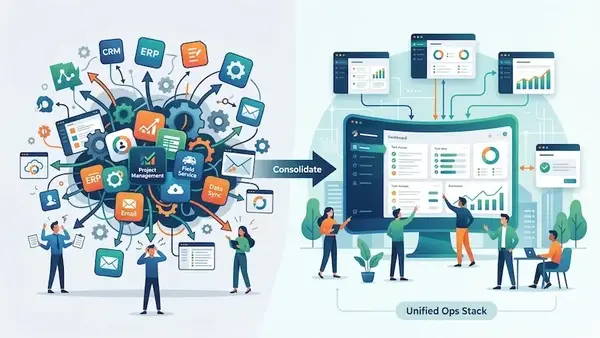
Siloed custom GPT configurations and disconnected third-party automation tools frequently create fragmented databases that frustrate sales teams. True operational efficiency requires moving away from patchwork setups and toward a fully unified revenue ecosystem that spans the entire buyer's journey.
Relying on disconnected toolsets introduces systemic vulnerabilities: data synchronization breaks down, critical context is lost during data transfers, and reps face massive cognitive fatigue from constantly toggling between different browser interfaces.
This critical need for deep integration is exactly why high-growth organizations look to advanced native systems like HubSpot's Breeze Prospecting Agent. Because it is built from the ground up directly into the core HubSpot Smart CRM, the Breeze Agent completely eliminates data fragmentation. Instead of operating blindly in an external silo, it analyzes real-time customer data, monitors active buying triggers across your target accounts, sources verified contact information, and generates hyper-personalized outreach sequences natively.
The underlying performance metrics emphasize the tangible financial impact of adopting an integrated revenue environment. HubSpot's platform performance data shows that
Businesses using unified ecosystem tools experience a 129% increase in total leads and a 36% increase in closed deals after one full year of implementation.
Furthermore,
Deploying these internal workflows results in an average of 2.7 x more deals closed per rep through smart-assistance tools.
Early enterprise activations report outreach response rates that climb to twice the standard industry benchmarks, helping organizations expand their market footprint cleanly without forcing parallel increases in overall sales headcount.
Developing Your Transition Plan
Transitioning your business development team to an advanced agentic operational model requires data preparation, alignment with your target buyer personas, and secure technical guardrails. True success in this landscape requires a deep appreciation for data cleanliness; an AI agent will only ever perform as well as the underlying CRM data it reads. Failing to clean your historical account databases before deployment inevitably results in misaligned messaging and broken outreach tracks that degrade your corporate reputation.
As an industry leader in pipeline engineering, Go-To-Market strategy, and CRM optimization, Aspiration Marketing designs, deploys, and manages custom HubSpot Breeze configurations. We specialize in mapping out your operational bottlenecks, standardizing internal CRM databases, and building robust prompt libraries tailored to your industry.
By implementing customized guardrails and strategic oversight frameworks, we help organizations successfully deploy agents that eliminate operational friction, safely scale personalized outbound communication, and accelerate sustainable revenue growth.
By transforming your team from manual data-gatherers into strategic editors, your business can unlock new competitive advantages and future-proof its entire pipeline architecture.





Leave a Comment
Have thoughts on this article?
Share your feedback, ask questions, or join the discussion with our community.