


Facebook, Google, and LinkedIn have become the go-to platforms for businesses aiming to convert clicks into conversions. Each offers distinct tools to turn your marketing dollars into real, measurable results, helping you connect with the right audience at the right time.
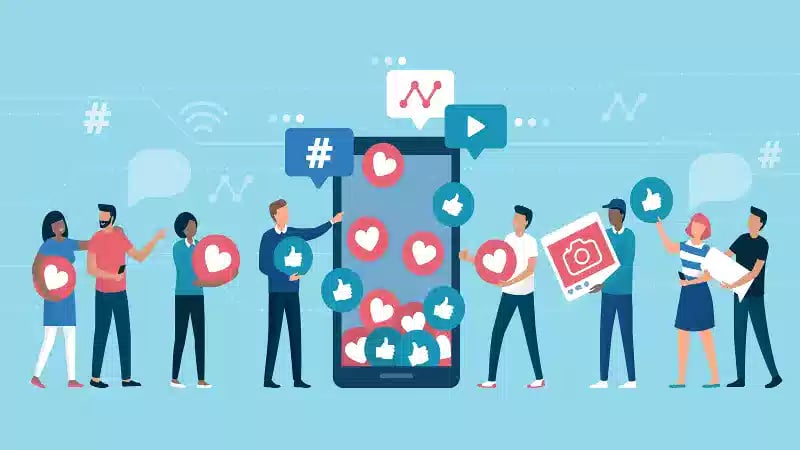

But for these platforms to work well within your overarching performance marketing management strategy, you need an integrated promotion strategy that factors in every bit of your social media presence and aligns with the other marketing avenues.
And we will help you with it, walking you through the mechanics of advertising on LinkedIn, Facebook, and Google. You will find top-performing advertising examples from leading companies across industries and leave with a clear marketing optimization roadmap.
LinkedIn Ads
LinkedIn is a community built around professional connections, skills, and interests. B2B advertising on LinkedIn is special in the way that you're addressing a knowledgeable audience who might know just as much about the subject in question as you do.
The deep expertise LinkedIn's audience possesses translates into the need for in-depth content that goes beyond general information and a promotional block. On LinkedIn, you might have a chance to stand out with case studies, research papers, statistics-driven content, and so on.
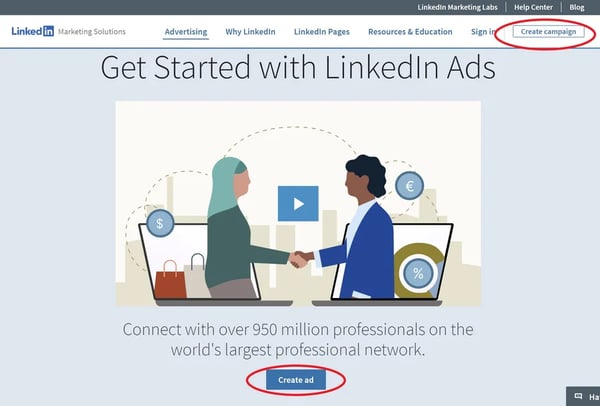
Targeting-wise, LinkedIn allows you to reach out to different groups of potential customers based on the company size, industry, job title, seniority level, and some other specific parameters. But then again, with 4 out of 5 LinkedIn users being decision-makers, you have to be specific and persuasive with your message.
How To Run Effective LinkedIn Campaigns
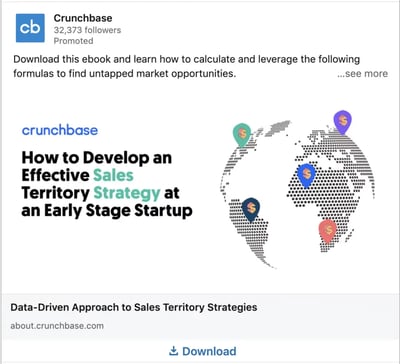
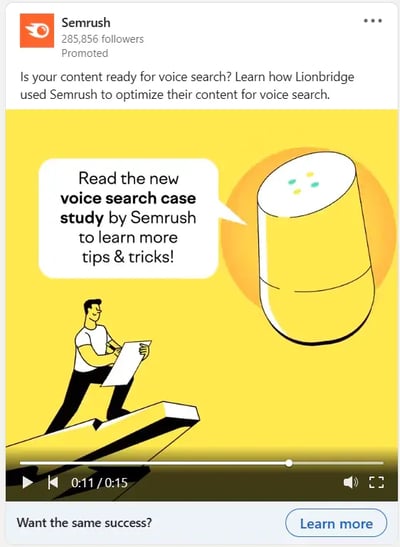
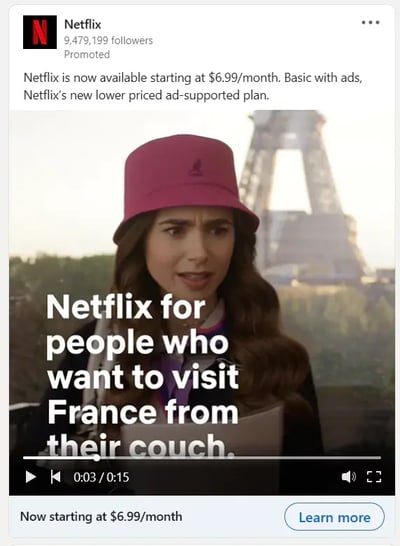
Here are several promo examples from Phonexa’s LinkedIn ads guide:
1. Crunchbase
2. Semrush
3. Netflix
Running a successful LinkedIn ads campaign requires more than just an eye-catching ad:
-
Know your audience: LinkedIn’s advanced targeting tools allow you to segment audiences based on skills, job functions, and group memberships and ensure higher engagement.
-
Conduct A/B tests: Try different ad formats and messages to find what works best. LinkedIn's Campaign Manager simplifies A/B testing, allowing you to easily test variations in copy and images.
-
Utilize lead generation forms: These forms, integrated directly into LinkedIn ads, facilitate the collection of valuable information from potential leads, showcasing lead generation best practices.
-
Monitor and adjust: Monitor metrics like click-through rate (CTR) and conversion rate with LinkedIn’s analytics tools to quickly identify and optimize underperforming campaigns.
LinkedIn offers several ad types, each designed to achieve specific marketing objectives:
-
Sponsored content: Native ads that blend seamlessly into LinkedIn feeds, designed to promote content like articles, videos, and infographics.
-
Sponsored messaging (InMail): Personalized messages delivered straight to a user's inbox. This is highly effective for promoting webinars, exclusive content, or special offers.
-
Dynamic ads: Ads that use the user’s LinkedIn profile data to create personalized, attention-grabbing ads, perfect for promoting events or boosting company page followers.
Facebook Ads
Facebook Ads are a paid advertising service that allows businesses to promote their products and services to a massive user base on the Facebook social media network. As the biggest social media network with a diverse range of ad types and formats, Facebook ads cost around $0.6 per click or $10.32 per 1,000 impressions. However, factors like seasonality, competition, and the specifics of your campaign can significantly impact these costs.
Advertising on Facebook includes such key formats:
- Image
- Video
- Stories
- Messenger
- Carousel
- Slideshow
- Collection
- Playables
Each format comes with specific CTAs to guide users to the next step.
1. Image Ads
Image ads are the most basic format of Facebook advertising to promote products, services, or brands. The single-image format is ideal for campaigns featuring strong static visuals, whether created through photography, design, or illustrations.
- Pros: Easy to create; can be made by boosting existing posts and are effective for any sales funnel stage.
- Cons: Limited to a single image.
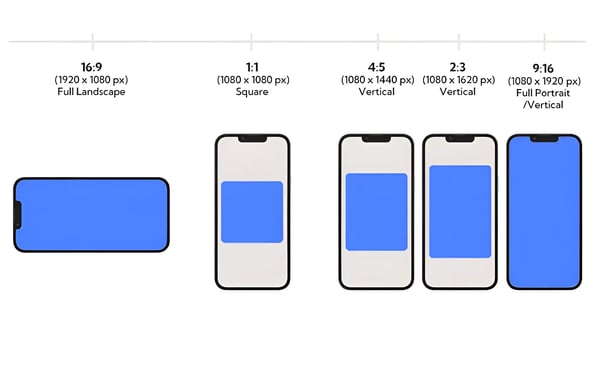
To create effective Facebook photo ads, ensure your ads meet these key specs:
-
Resolution: Minimum of 1,080 x 1,080 pixels.
-
Format: JPG or PNG.
-
Aspect Ratio: Between 1.91:1 and 1:1 to avoid cropping.
-
Text-to-Image Ratio: Keep text below 20% of the image.
-
Text Length: 125 characters for primary text, 27 for the headline, and 27 for the description.
-
Additional Requirements: Follow specific guidelines for placement and targeting to optimize performance.
2. Video Ads
Facebook video ads enable businesses to showcase products, services, or brands through engaging video content.
- Pros: Effective for product demos and tutorials, adding movement to users' feeds which can enhance engagement.
- Cons: Time-consuming to create and can be expensive; not suitable for simple messages.
3. Stories Ads
Designed for mobile devices, stories ads on Facebook utilize a full-screen vertical video format that takes advantage of how users naturally hold their phones. With the increasing popularity of stories--62% of U.S. users plan to use them more--this format offers more creative freedom.
- Pros: Allows the use of emojis, stickers, filters, and video effects for a more engaging experience.
4. Messenger Ads
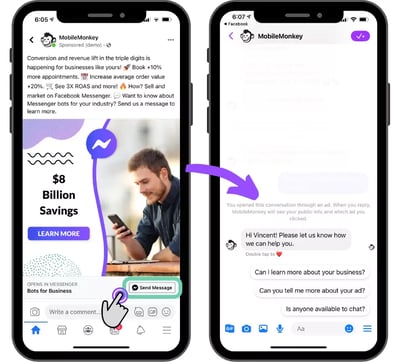
Messenger ads appear within Facebook Messenger, providing a personal touch as users see them among their conversations. This format encourages active interaction with brands.
- Pros: Effective for small businesses looking to promote local products or services.
5. Carousel Ads

Carousel ads allow businesses to display up to ten images or videos that users can swipe through. Each item can have its own headline, description, or link.
- Pros: Great for showcasing multiple products or guiding users through a process. Each image can link to a specific landing page.
6. Slideshow Ads
Slideshow ads consist of 3-10 images or a single video that plays in a slideshow format. This variant of Facebook advertising uses less data than traditional video ads, which is suitable for users with slower internet connections.
- Pros: A cost-effective alternative to video ads and requires less data.
7. Collection Ads
Collection ads offer an immersive, mobile window-shopping experience. Users can browse through a lineup of products and make purchases directly from the ad.
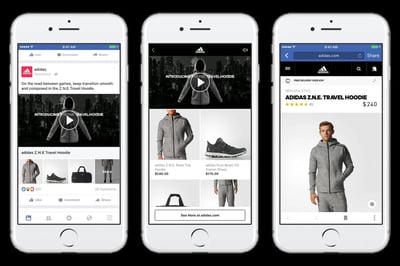
- Pros: More customizable and engaging than carousel ads. Ideal for businesses with a diverse product range.
8. Playables
Playables allow users to try out a game before downloading it. This Facebook ad strategy offers a demo experience, increasing the likelihood of quality leads for game downloads.
- Pros: Engages potential players by providing a hands-on preview of the game.
Here are five essential tips to elevate your Facebook advertising game.
-
Make your ads mobile-friendly. With most social media users accessing platforms via their phones, ensuring your ads are mobile-optimized is crucial. Film videos vertically (9×16) to fill the screen, use minimal text in large fonts, and incorporate engaging animations. Keeping videos short (ideally under 15 seconds) will help capture attention swiftly.
-
Create a catchy message. Start your ad with the key message and branding within the first three seconds to grab attention before users scroll away.
-
Make sound optional. Many users watch videos with the sound off, whether they’re on public transport or simply prefer it that way. Use clear visuals, captions, and text to ensure your ad stays engaging without relying on sound.
-
Utilize Facebook’s unique method. Use the pitch, play, plunge method: raise brand awareness (Pitch), create interactive content (Play), and offer immersive experiences for deeper engagement (Plunge).
-
Base ad decisions on analytics. Data is key to refining your ad strategy. Use Facebook’s analytics to track impressions, clicks, and engagement, and consider third-party tools like Hootsuite for deeper insights.
Google Ads
Google Ads is Google’s PPC platform designed to help businesses gain visibility across Google's properties. The most common type is the search ad, which appears on the search engine result pages (SERPs) for relevant queries.
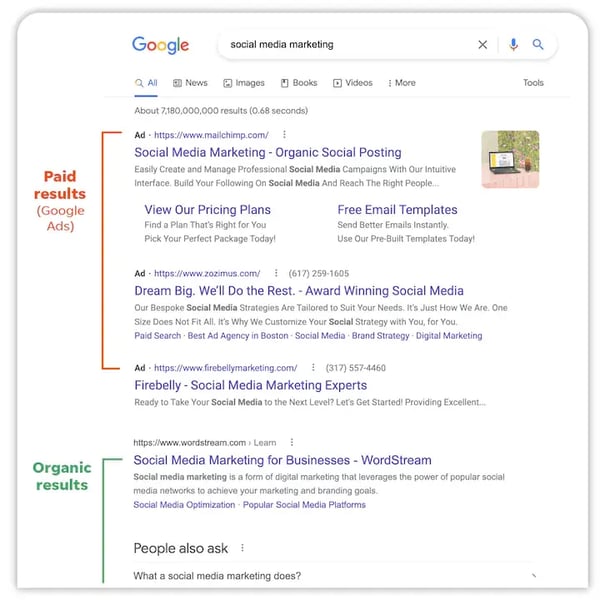
Types of Google Ads
-
Search ads: Appear on the SERP when users search for related products or services, shown above or below organic results.
-
Display ads: Shown on third-party websites in the Google Display Network, using text, image, or video formats to target audiences.
-
Shopping ads: Displayed on the SERP and Shopping tab; these use your product catalog to match searches.
-
YouTube ads: Video, text, or display ads shown on YouTube before or during videos.
It's no secret--YouTube is the world's second-largest search engine and second-most visited site, right after Google.

Google Ads revolves around keywords---the words people are most likely to use when searching for products or services.
You can use Semrush as a tool for finding key phrases, simply by:
"SEO” > "KEYWORD RESEARCH," click "Keyword Magic Tool."
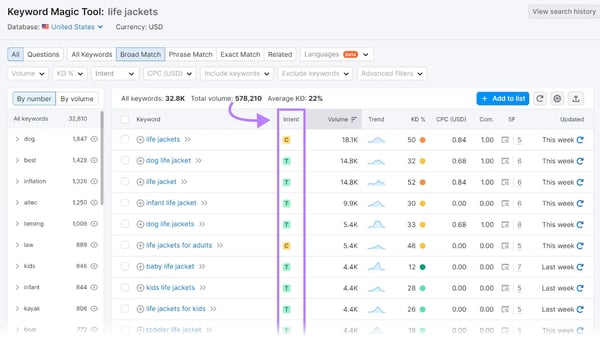
Advertisers choose a set of keywords relevant to their offer when creating a Google Ads campaign.
When a user searches on Google, Google checks if any advertisers are bidding on keywords relevant to that search. If so, those keywords are entered into the auction.
Google ads with the highest Ad Rank, calculated by multiplying the Quality Score and the bid amount, will appear on the SERP.
Google uses several factors to determine which ads appear on the SERP, including:
-
Quality score: Google assigns each keyword a Quality Score based on its relevance to the query, ad group, and landing page, as well as historical performance.
-
Ad rank: Determines your ad position and is calculated by multiplying your Quality Score and maximum bid amount.
A high-quality score means lower costs per click (CPC), which helps improve your return on investment (ROI). Additionally, such ads are displayed more often and in better positions, such as the top of the SERP.
Key factors influencing your Google ad’s performance:
- The relevance of your ad to the search query
- The relevance of your keywords to your ad group
- The historical click-through rate (CTR) of your ad
- The overall performance of your account
The cost of Google ads varies based on keyword competition, industry, and geographic location. In the U.S., the average price per click for search ads is $2.32. However, costs can differ significantly in other countries.
If you're seeking free Google advertising options, consider these strategies:
-
Promotional codes: Google offers promotional codes for new advertisers, such as "Spend $500, get $500." To use these, create a new Google Ads account and enter the code within the specified timeframe.
-
Finding promo codes: You can discover these codes through special promotions, partnerships, or tools like Couponer, which helps you apply the codes automatically.
-
Eligibility and claiming: New advertisers typically qualify for promotions. After entering a code, check the "Promotions" section in your Google Ads account to track your credits.
How To Run Google Ads
Setting up your Google Ads account takes just a few simple steps:
-
Add business information. Enter your business name and URL to simplify setup. Link existing accounts like YouTube and Google Business Profile for faster integration and relevant keyword suggestions. You can also create an account without launching a campaign immediately.
-
Set campaign goals and budget. Choose your campaign objectives and allocate a budget to control your spending, as Google provides flexible budget options.
-
Add payment details. To finalize your setup, enter your billing information. Select the appropriate billing country, time zone, and payment method (e.g., credit card, PayPal, or bank account).
-
Set up conversion tracking (Optional). Conversion tracking allows you to measure key actions users take on your website, such as purchases or sign-ups.
Elevate Your Strategy with Pay-Per-Call Advertising
Pay-per-call advertising is an innovative approach that complements traditional digital marketing strategies on platforms like LinkedIn, Facebook, and Google. It allows businesses to pay only for phone calls from potential customers who engage with their ads.
Integrating pay-per-call marketing strategies into your campaigns not only improves lead generation but also offers a tangible way to measure return on investment (ROI). Businesses can optimize their advertising spend, ensuring they effectively reach their desired audience.
Master Digital Advertising To Generate and Convert More Leads
Marketers can enhance brand visibility and drive conversions through LinkedIn's professional network, Facebook's diverse ad formats, or Google's PPC system. Each platform's strengths will help you reach your target audience and convert clicks into conversions. And you can go even further: pay-per-call advertising further amplifies your efforts, allowing for a more direct and measurable connection with high-intent leads.



Leave a Comment
Have thoughts on this article?
Share your feedback, ask questions, or join the discussion with our community.