



您是否曾计算过,当一线客服人员正与客户积极沟通时,究竟有多少经常性收入正从指缝间流失?
每家企业都深知,客户留存对可预测的增长至关重要。然而,绝大多数企业的客户服务部门仍完全陷于被动应对的运营模式中。他们每天处理数百次互动,将单个工单视为需要尽快关闭的孤立任务。仅此而已。
 这让许多企业领导者不禁思考:
实时客服能否预测客户何时即将流失?
幸运的是,答案是肯定的。在这些活跃的实时支持流中,蕴藏着一座尚未开采的预测数据宝库。
客户很少会毫无征兆地决定终止业务关系。相反,在正式解约之前,他们往往会释放出明显且反复出现的沮丧信号。他们可能会改变语气,提及竞争对手的定价结构,或者对反复出现的软件故障表示厌倦。
遗憾的是,标准的客户成功架构对这些实时信号视而不见。大多数企业几乎完全依赖滞后指标,例如:
-
净推荐值(NPS)问卷
-
互动后的客户满意度(CSAT)邮件
-
按季度安排的客户账户审查
虽然这些评估方法能提供有价值的回顾性视角,但作为预警工具却力不从心。当企业采购方完成年度调查并将其体验评为“差”时,他们通常已经完成了对市场替代方案的评估。他们并非在寻求帮助,而是在为自己早已做出的离开决定寻找理由。
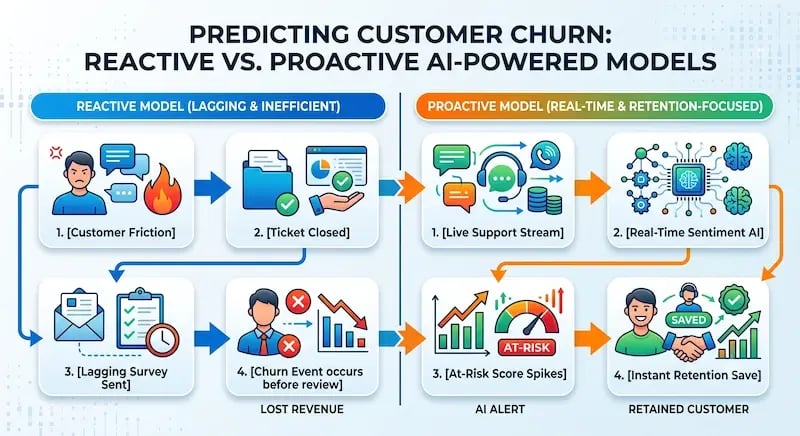 为解决这一问题,具有前瞻性的企业正在改变其对话数据的使用方式。通过将先进的机器学习模型直接嵌入实时文本聊天和电话渠道,企业能够实时分析客户情绪。这些自然语言处理引擎会逐行读取对话记录,或逐秒分析音频内容。
该软件将这些输入转化为动态、实时更新的风险评估分数。 如果对话中出现严重摩擦的迹象,平台会向客户经理或专门的客户留存团队发送自动警报。您的团队无需在事后复盘中分析客户流失的原因,而是在客户挂断电话或关闭聊天窗口之前就及时介入,从而扭转局面。
客户流失的实际财务影响是什么?
客户流失是企业可能面临的最昂贵的运营低效问题之一。替换流失的客户需要大量的营销预算、漫长的销售周期以及冗长的客户入职流程。
关于企业客户留存效益的财务数据证明了这一问题的重要性:
-
利润倍增效应:《哈佛商业评论》的一项经典研究表明,整体客户留存率仅需提高 5%,就能使企业净利润增长25% 至 95%
-
全球累计损失:根据 CallMiner 发布的宏观经济数据,美国企业每年因本可避免的客户流失而损失约 1,360 亿美元。
-
AI 投资规模:这种巨大的资金流失解释了为何企业领导者正将资本大量投入到自动化支持系统中。Gartner 的最新数据显示,客户服务和支持高管将其总预算的中位数 12%投入到人工智能工具中,在评估的十大主要企业业务职能中,这一比例最高
企业因可避免的客户流失而损失数十亿美元的主要原因,在于未能将运营支持渠道与战略营收团队有效衔接。遇到技术问题的客户不会将自身问题视为孤立的工单。对他们而言,这是供应商核心产品承诺的失守。
如果贵公司的内部系统将这种互动视为一项标准任务,仅要求在任意的六小时服务水平协议(SLA)时限内解决,那么您就忽略了驱动对话的情感背景。电话通话和文字对话中蕴含着真实的人类情感。在客服代表接听前长时间的沉默、音量突然升高,或是诸如:
“这已经是第三次因为同一个问题打电话了”
都是明确的警示信号。当企业忽视这些信号时,客户会感到被忽视,从而自然而然地选择解约。
机器学习如何实时解读客户情绪?
要构建自动化客户留存框架,企业必须理解软件如何从实时数据流中提取情感信息。该技术依赖于自然语言处理(NLP)、语音转文本算法以及预测性深度学习框架的结合。

当企业客户联系客服代表时,传入的数据会同时流入机器学习评估管道。对于电话通话,专门的音频处理软件会在追踪声学线索的同时生成实时文字记录;对于网络聊天窗口,系统则会在用户输入文字的瞬间实时捕获文本。
机器学习模型通过三个不同的运营层对交互进行评估:
1. 声学流分析
在语音渠道上,该软件监控的变量远不止于原始词汇。它会追踪语调、音量变化、语速,以及对话重叠的时刻——例如客户反复打断客服代表说话的情况。长时间的沉默或声音能量的突然变化会被立即标记为客户情绪日益激动的迹象。
2. 语义与文本处理
自然语言处理(NLP)引擎会扫描文本字符串,查找特定短语匹配、语法结构以及情感词汇的选择。 它会筛选出明确表达不满的措辞(如“无法接受”、“完全无法使用”、“失望”),并识别高风险短语,例如“注销我的账户”、“退款”或特定的竞争对手产品名称。
3. 上下文数据整合
该模型不会孤立地评估单次对话。真正的预测智能需要将实时对话数据与从公司客户关系管理(CRM)平台提取的历史数据相结合。系统会核查客户近期联系的频率、其合同总价值以及整体产品使用趋势。
| 技术分析层 | 监测的关键指标 | 流失预测价值 |
|---|---|---|
| 声学处理 | 音调变化、语速、插话以及音量骤升。 | 能捕捉到标准文本转录中遗漏的、沸腾般的沮丧与愤怒。 |
| 语义提取 | 特定短语匹配、提及竞争对手名称、保单咨询。 | 识别明确的离店意图或正在进行的比价行为。 |
| 语境关联 | 工单量、合同金额以及产品使用率的历史性下滑。 | 标记复合摩擦点——即单次不良通话与账户流失模式相吻合的情况。 |
随着这三个分析层处理实时数据流,系统会持续计算 “风险 评分”。该评分不会等待工单状态变为“已解决”或“已关闭”,而是随着每句语音或输入内容的更新而动态调整。
如果计算出的风险指数超过预定义的风险阈值,软件将绕过标准支持渠道并触发自动警报。 系统会将此警报直接发送给客户经理或专职客户留存专家。由于警报中包含完整的对话记录、上下文以及升级处理的原因,专家可以在客户仍在互动过程中及时介入,挽留该客户。
企业如何利用 HubSpot Breeze AI 识别客户流失信号?
过去,部署实时情绪分析需要巨额的软件工程投入、定制化的数据管道以及一支专门的数据科学家团队。 如今,现代生态系统工具使成长型企业也能轻松获取这种企业级能力。HubSpot 的人工智能引擎 Breeze 利用机器学习分析语音和聊天记录的情感及上下文,使服务、销售和营销团队能够即时识别高流失风险客户并评估反馈。
Breeze 没有采用那种忽略不同客户账户细微差别的僵化单一评分计算方式,而是为面向客户的团队提供了一套多功能工具包。这些工具能在您的日常工作流平台中直接呈现清晰的流失信号:
主动识别高流失风险账户
Breeze 会全面评估客户关系。它同时监控账户健康指标、活跃支持工单量以及历史通话模式。综合分析这些不同的数据点,可以揭示账户行为中的细微异常。
例如,如果某家历史支持工单量较大的企业客户突然停止提交支持工单,同时其文字聊天情绪评分下降,Breeze 会将该账户标记为流失风险,并为团队提供制定干预措施所需的背景信息。
大规模处理客户反馈
对于精简的客户成功团队而言,手动审核数千条历史交互日志或调查回复几乎是不可能完成的任务。Breeze 通过自动化机器学习模型分析海量文本数据库,在数秒内提取宏观层面的满意度趋势、常见的产品投诉以及普遍存在的客户服务摩擦点,从而解决了这一瓶颈。
最大化对话智能(CI)
HubSpot的对话智能(CI)平台改变了管理层处理语音交互的方式。该系统会自动从实时支持流中捕获语音数据,生成干净的文本记录,并将追踪到的关键词直接同步到 HubSpot 智能 CRM 中的个人联系人档案中。
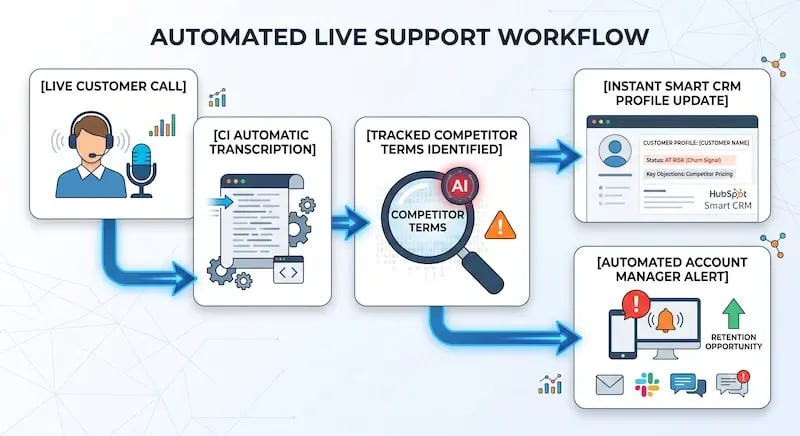
支持渠道的情绪分析与中央 CRM 架构之间的这种直接连接,确保了整个前台团队的协同一致。销售代表在尝试进行续约沟通之前,会自动收到客户摩擦点的提醒。与此同时,营销团队可以实时查看客户的具体异议,从而帮助他们优化信息传递,以解决常见的痛点。
如何将实时情绪数据转化为即时行动?
部署先进的人工智能模型来发现客户的挫败感,仅仅是成功客户留存策略的一半。 实时情绪数据的真正价值完全取决于贵组织构建内部工作流的能力,这些工作流能根据这些洞察立即采取行动。如果发现一位高价值客户在支持通话中非常愤怒,但相关通知却在经理的收件箱里闲置数日无人阅读,那么这一发现便毫无意义。
要将实时支持洞察转化为实际的客户留存成果,企业运营必须优化以下三个结构性支柱:
1. 构建智能路由工作流
当实时支持流生成的“风险评分”显示客户沮丧程度较高时,系统必须采取与处理标准工单不同的应对方式。智能路由工作流会自动将实时聊天或电话呼叫升级处理,而非让高价值客户在普通支持层级的队列中等待。
系统会将交互直接转接给高级经理或专职客户留存专家——他们经过专业培训,配备相应工具并拥有决策权,能够立即提供解决方案,例如合同修改、账单调整或定制软件修复。
2. 设计有效的升级处理用户体验
当系统将正在进行的互动标记为高风险时,一线客户支持专员需要简洁、专注的用户体验(UX)。如果专员在试图安抚情绪激动的客户时,还必须操作笨拙复杂的软件界面,其工作表现将受到影响。
设计良好的升级处理界面会直接在客服代表屏幕上显示有用的建议,提供实时的谈话要点、相关解决工作流的链接,以及一种简单的机制,可在不中断客户实时通话的情况下将对话转接给专家。
3. 追踪客户留存指标和软件投资回报率
在支持渠道中部署先进的机器学习模型需要明确的财务依据。为了证明情感分析工具的投资回报率(ROI),运营团队必须长期主动监控关键绩效指标:
-
客户终身价值(CLV):追踪接受过实时干预的账户中客户终身总价值的变化情况。
-
警报解决效率:衡量高风险自动化警报中成功挽救客户关系的精确比例。
-
总体客户流失率:将历史账户流失率与当前留存率进行对比,以量化挽救的总收入。
从被动支持转向主动增长
等待客户在年度电子邮件调查中表达不满,是一种过时的商业策略。在当今瞬息万变的企业环境中,保护收入需要采取实时行动。通过密切关注实时支持渠道,并利用机器学习模型实时分析客户情绪,您可以及早发现摩擦点并防止客户流失。
部署这些先进的人工智能工具、设置自动化路由工作流以及优化您的 CRM 基础设施,都需要明确的技术战略。
这正是Aspiration Marketing助力贵组织实现增长之处。我们专注于协助企业实施战略性入站营销框架,充分发挥 HubSpot 生态系统的价值,并将 Breeze 等先进 AI 工具整合到日常工作流程中。
我们的团队确保您的支持渠道将干净、可操作的数据直接融入业务战略,从而将您的客户服务团队转变为主动的收入保障引擎。







发表评论
对这篇文章有什么看法吗?
分享您的反馈、提出问题,或与我们的社区一起参与讨论。