





Have you ever felt like your marketing technology stack is a room full of brilliant musicians all playing different songs at the same time? It is loud, it is impressive, but it certainly isn't music. As we continue through the year, many revenue leaders find themselves in this exact position. We have moved past the initial "wow factor" of generative AI. Now, we face a new challenge: how do we actually manage it all?

If 2024 was about learning to talk to a chatbot and 2025 was about deploying single-use agents, then 2026 is the year of the AI Orchestrator. An **AI Orchestrator is a pivotal role and technology layer representing a fundamental shift in how Revenue Operations (RevOps) functions.** It signifies the transition from manual oversight to autonomous harmony.
But what does the AI Orchestrator role actually look like? Why is it suddenly the most important seat at the executive table? And most importantly, how do you ensure your brand does not get left behind in an era where search is being replaced by answers?
The Great Revenue Shift: Why Now?
For years, the goal of RevOps was to "align" sales, marketing, and success. We used spreadsheets, weekly syncs, and manual CRM updates to keep everyone on the same page. Then, the AI explosion happened. Suddenly, marketing had an AI for copy, sales had an AI for prospecting, and customer success had an AI for chatbots.
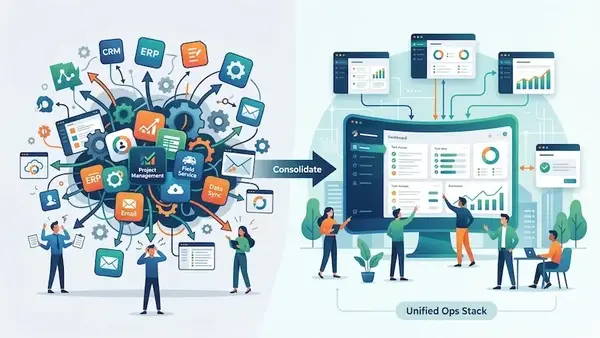
The result? A phenomenon known as AI Sprawl. **AI Sprawl is the unmanaged proliferation of disconnected, siloed automated bots.** Instead of silos of people, we created silos of automated bots. According to recent data from Skaled and Gartner,
By the end of 2026, 75% of high-growth companies operate with a formal RevOps model, up from just 58% in 2025.
These companies realized that without a central conductor, their AI tools were actually creating more friction, not less.
This is where the AI Orchestrator comes in. The AI Orchestrator designs the ecosystem where autonomous AI can thrive without human hand-holding. They ensure that the data flowing into your AI is clean, that the agents are talking to each other, and that every automated action moves a prospect closer to a sale.
The Human vs. The Machine: Defining the Partnership
Before we dive deeper, we must answer a critical question: Is an AI Orchestrator a human being or a technical platform? The answer is both. They exist in a symbiotic partnership, much like a pilot and an advanced navigation system.
1. The Technology: The Orchestration Layer
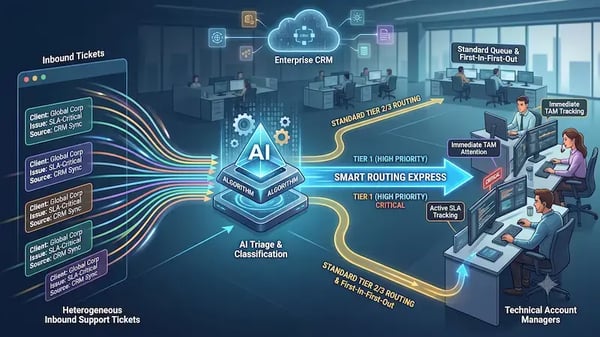
From a technical standpoint, an **orchestration layer is a software platform** that acts as the connective tissue between different AI agents. It uses tools like HubSpot Breeze or advanced middleware like Zapier Central.
- It routes tasks between bots.
- It manages API calls and data transfers.
- Enforces technical guardrails and ensures the system doesn't hallucinate or break.
- It maintains a "shared memory" across your tech stack. Without this technical layer, your Prospecting Agent wouldn't know that your Support Agent just received a complaint from the same lead.
2. The Human: The AI Orchestrator (The Role)
The **AI Orchestrator, as a job title, is a human leader.** This person—likely a VP of AI Ops or a RevOps Director—is the one who sets the "why" and the "how." They don't necessarily write the code, but they design the workflows.
- They decide which agents to hire for specific tasks.
- They set the strategic goals (e.g., "Reduce customer churn by 15% using predictive modeling").
- They oversee the Human-in-the-Loop (HITL) checkpoints.
The machine provides the speed and the scale, but the human provides the intent and the ethics. Today, you cannot have one without the other. If you have the software without the human lead, you have a rudderless ship. If you have the human without the orchestration software, you have a conductor with no orchestra.
Defining the AI Orchestrator: From Tool User to Conductor
What exactly does this partnership do for your business? We define **AI Orchestration as the strategic oversight of the governance, data flow, and output of autonomous revenue agents.**
Think of the difference between a Generative approach and an Autonomous approach. In a generative world, a human asks an AI to write an email. In an autonomous world, an AI Orchestrator sets a goal:
"Increase pipeline in the manufacturing sector by 10%"
And a fleet of agents executes the research, the outreach, and the follow-up.
The Three Pillars of Orchestration
- Data Governance: AI is only as smart as the data it consumes. If your CRM is messy, your autonomous agents will make messy decisions. The Orchestrator ensures garbage-in does not become automated garbage-out.
- Agent Alignment: In a typical 2026 stack, you might have a HubSpot Breeze Agent for prospecting and another for customer service. The Orchestrator ensures these agents share a memory. If a prospect tells the service bot they are unhappy, the prospecting bot should immediately stop its upsell sequence.
- Output Integrity: The Orchestrator sets the guardrails. They define the brand voice, the ethical boundaries, and the technical limits of what the AI can promise a customer.
By focusing on these pillars, RevOps moves from a back-office support function to a primary driver of growth.
Research from Sirocco indicates that organizations integrating agentic AI into their daily workflows can see productivity gains of up to 40%.
Those are not just small wins; those are market-shifting advantages.
Navigating the Shift from SEO to AEO
If you are a marketing leader, you probably grew up on SEO (Search Engine Optimization). You fought for the first page of Google. You tracked clicks. But the game has changed. We are now firmly in the era of AEO (Answer Engine Optimization). **Answer Engine Optimization (AEO) is the practice of structuring and creating content so it can be easily understood, cited, and served as a direct answer by AI models like ChatGPT or Gemini.**
When a potential buyer asks a tool like Gemini, Perplexity, or ChatGPT, "What is the best CRM for a mid-sized SaaS company?", they don't get a list of links. They get a definitive answer. If your brand isn't part of that answer, you don't exist in that buyer's journey.
This is a "Zero-Click" world. Recent studies show that,
Nearly 60% of Google searches end without a single click to a website.
People want the answer, not the journey to find it.
The Orchestrator's Role in AEO
The AI Orchestrator manages how your company's knowledge is served to these answer engines. They ensure your technical documentation, blog posts, and customer reviews are structured so AI "crawlers" can easily digest and cite them. They aren't just optimizing for keywords; they are optimizing for authority.
Are your case studies formatted so an AI agent can find your ROI statistics? Is your executive team's thought leadership being indexed by the LLMs? These are the questions an Orchestrator answers every day. They ensure your data is citable, turning your content into the foundation for AI answers.
The End of the MQL: Enter Autonomous Pipeline
For decades, the Marketing Qualified Lead (MQL) was the gold standard. Marketing hit a button, a lead scored high enough, and it was tossed over the fence to Sales. It was a clunky, often broken process.
The AI Orchestrator has officially retired the MQL. Why? Because autonomous AI can now manage the entire "middle" of the funnel.

With tools like HubSpot Breeze Agents, the gap between marketing and sales has vanished. A Prospecting Agent doesn't just wait for a lead to download a whitepaper. It actively researches the prospect's latest LinkedIn posts, reviews their company's annual report, and crafts a deeply personalized outreach—all without a human having to click "send."
Why This Works
The AI Orchestrator sets the strategy:
"Find us companies with over 500 employees who just hired a new CTO."
The agents do the rest. This isn't spamming at scale; it is relevance at scale. Because the AI can process millions of data points in seconds, it can be more human in its outreach than a rushed BDR ever could.
The impact on the bottom line is clear.
Companies with formal RevOps functions, managed by skilled orchestrators, report 36% higher revenue growth than those stuck in the old siloed model.
New Metrics for a New Era: What the Orchestrator Tracks
If clicks are disappearing and MQLs are dead, how do we measure success? The AI Orchestrator focuses on a new set of KPIs that reflect reality.
AI Visibility Index: This measures how often your brand is the Top Recommendation in an AI-generated summary. If a buyer asks for the "Top 3 Providers," are you one of them?
Citation Frequency: In the AEO world, being cited as a source is the new Backlink. How many times do LLMs reference your proprietary data or research as the factual basis for their answers?
Pipeline Velocity (Autonomous): This tracks the time from the first AI-initiated contact to a booked meeting. The goal is to reduce friction time where a lead is just sitting in a queue waiting for a human to call them back.
Share of Answer: Similar to Share of Voice, this tracks what percentage of relevant industry queries result in your brand being mentioned by an AI assistant.
By shifting focus to these metrics, the Orchestrator keeps the team focused on what actually drives revenue in a zero-click environment.
The Human Element: Staying in the Loop
You might be wondering: "If everything is autonomous, what do the humans do?"
This is a common fear, but the reality is quite the opposite. The AI Orchestrator role is more human-centric than ever. While the agents do the doing, the humans do the thinking.
This is why we need the Human-in-the-Loop (HITL). The Orchestrator defines the Review Checkpoints. For example, an AI agent might draft a multi-million dollar contract, but a human has to approve it. An AI might identify a brand-new market segment, but a human has to decide if the company's long-term vision aligns with entering that market.
Consider a recent example from Bain & Company:
A large company used embedded AI assistants throughout its RevOps workflows. They didn't fire their staff; instead, they reduced their campaign time-to-market by 50%.
The team spent less time on data entry and more time on high-level creative strategy.
The AI Orchestrator is the person who makes sure this balance stays healthy. They prevent the company from becoming a bot farm while ensuring they aren't stuck doing everything manually.
Building Your Roadmap
Becoming an AI-driven organization doesn't happen overnight. It requires a deliberate roadmap. If you want to step into the role of an Orchestrator, here is where you start:
Step 1: Audit Your Data Hygiene
You cannot orchestrate chaos. Start by cleaning your CRM. Ensure your contact records are deduplicated, and your property fields are standardized. If your data is messy, your AI Orchestrator will spend all their time fixing errors instead of driving growth.
Step 2: Consolidate Your Tech Stack
Stop buying one solution for every problem. If you have one tool for email, one for LinkedIn, and one for your website, they will never truly talk to each other. Look for platforms like HubSpot that offer "embedded" agents. When your agents live inside your CRM (like HubSpot Breeze), orchestration becomes much easier because they are already looking at the same source of truth.
Step 3: Define Your AI Guardrails
What can your AI say? What can it never say? Start building your Brand Voice Library and your Ethical AI Policy. The Orchestrator needs these documents to program the agents effectively.
Step 4: Focus on Authority, Not Just Traffic
Start creating content that is AI-readable. This means using clear headings, bullet points, and factual, data-backed statements. The goal is to become the Source of Truth for your niche, so that when an AI engine looks for an answer, it chooses you.
The Future is Orchestrated
The marketing landscape is exciting but also unforgiving. The gap between companies that "use AI" and companies that "orchestrate AI" is widening every day. Those who continue to treat AI as a series of cool gadgets will find themselves buried under a mountain of disconnected data and "zero-click" search results.
However, those who embrace the role of the AI Orchestrator will find themselves in a position of unprecedented power. They will lead leaner, faster, and more accurate revenue engines. They will reach buyers exactly when they are looking for answers, and do so with a level of personalization previously impossible.
The question is simple:
Are you just a musician playing your own tune, or are you ready to conduct the symphony?
The transition from traditional RevOps to a fully orchestrated AI model is a significant journey. It requires deep technical knowledge of how autonomous agents interact, a masterful grasp of data architecture, and a forward-thinking strategy for the Answer Engine era. This is where Aspiration Marketing excels.
At Aspiration Marketing, we don't just help you "set up" tools; we help you build the infrastructure for the future of revenue. From implementing HubSpot Breeze Agents to crafting high-authority AEO strategies, our team acts as your strategic partner in this shift. We help mid-to-large B2B companies eliminate AI Sprawl and replace it with a unified, autonomous revenue machine.
If you are ready to move past the hype and start building a real, data-driven AI orchestration model, let's talk. The future of RevOps is already here—it's time to take the lead.





Leave a Comment
Have thoughts on this article?
Share your feedback, ask questions, or join the discussion with our community.