





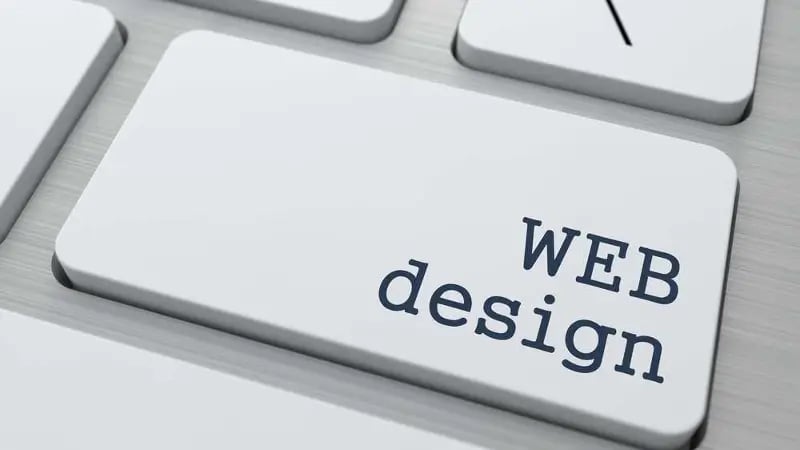
When considering animation, hero images, and visual randomness, it's easy to get lost in flashy fads. Instead, it's important to focus on impactful website design trends within the context of your organization's online marketing strategy and SMART goals. Website design trends are the prevailing styles and technologies that shape how websites look and function, directly impacting user experience, site performance, and conversion rates. If you're ready to refresh your web design, focus on trends that will support greater speed and higher conversion rates.

Speed Is King
For years, content held the crown in the marketing and SEO world. Engaging, SEO-friendly content is still critical to your website's success. But in July 2018, Google rolled out its Speed Update for all users, including mobile searches. Now your website's speed will factor into its page ranking. This is a strong incentive for rethinking design elements that can delay a page's loading time, such as huge photos, long videos, or cumbersome Javascript. Since 2019, you see web designers taking a speed-conscious approach.
1. Make Use of Flat Design
Flat design is a minimalist design approach that favors clean lines, plenty of white space, and uncluttered layouts using two-dimensional elements. Pages that use flat design typically load quickly because they lack visual elements like large photos and videos. These designs can still pop thanks to bright color blocks and striking typography. Icons and line art will continue to play an essential part in flat design because they provide simple, clean visual elements that can be easily adapted to fit the color, size, and feel you need without slowing load time.
2. Consider Accelerated Mobile Pages (AMP)
Accelerated Mobile Pages (AMP) is an open-source HTML framework designed to deliver maximum speed and readability for mobile users by creating simplified, fast-loading versions of web pages. First introduced as an open-source initiative by Google and Twitter in 2015, AMP is a sort of HTML lite. While AMP used to be more or less optional, addressing mobile speed in our post-Speed Update world is essential. Although this sounds like a development issue, web designers must know that AMP requires a much simpler CSS and very little Javascript, which can affect design choices.
3. Offer Skimmable Web Content
Research consistently shows that users are taking less and less time to evaluate a website, so your visitor's first impression is more important than ever. In the coming years, you'll continue to see designs featuring snappy, prominent headlines and other text features such as sub-headings and short supporting copy to help visitors quickly assess a site's content. This doesn't mean longer pages will disappear—see below for another seemingly contradictory trend: longer landing pages.
Remember that this isn't about speed for speed's sake or just for Google's sake. When your website loads quickly, people are more likely to stick around to see what you have to say, so a faster website can help you get more conversions just by getting people to the site in the first place.
Conversion Goes Beyond Buttons
We've all grown accustomed to seeing and using online call-to-action (CTA) buttons. Those buttons have evolved in the past few years with CTA hierarchies that include different button styles for secondary and tertiary CTA buttons and, more recently, with the widespread adoption of translucent buttons that are less distracting. CTA buttons are incredibly effective conversion tools, and CTA optimization is critical for improving your conversions.
But, web designers have additional conversion techniques to consider.
4. Deploy Chatbots
A chatbot is an AI-powered software application designed to simulate human conversation through text or voice commands, often used on websites for customer service and lead generation. Driven by the same kind of artificial intelligence (AI) that powers Facebook's photo tagging suggestions and Google Search's auto-completions, these bots are getting more sophisticated. They are a terrific means of gathering information about a prospect before your sales team initiates contact. In the coming years, web designers will move beyond the conventional chatbot pop-up to find thoughtful, novel ways of visually integrating chatbots into a site's overall design.
5. Use Goal-Responsive Design
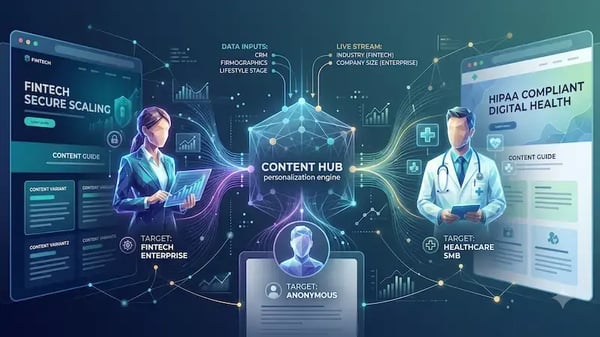
Goal-responsive design is an advanced web design technique that uses AI and machine learning to dynamically customize a website's content and layout based on an individual visitor's goals and behavior during their visit. You're likely familiar with responsive design that displays a website for your specific device. The next (giant) step is to tailor the website based on each visitor's goals for each visit. Imagine visiting an online clothing store and answering questions about your size and what you're looking for. Then the whole website could change based on your answers. Showing visitors exactly what they're looking for is a proven technique for increasing conversions and will be increasingly accessible thanks to AI and machine learning.
6. Implement Longer Landing Pages
Admittedly less sexy than the two trends above, longer landing pages are coming to B2C and B2B websites. Longer landing pages allow them to tell a complete story, leading them further into the buying cycle. It's an opportunity to address the needs of your different buyer personas or to answer frequently asked questions. Designed (and written) effectively, longer landing pages help to drive more conversions to a specific campaign.
7. Consider Single-Page Design
A single-page design is a website structure that presents all primary content on a single, continuously scrolling page, ideal for focusing on a single call-to-action. On the other end of the spectrum, the single-page website continues to gain popularity. Although they eliminate the opportunity to provide in-depth information around various targeted keywords, single-page websites are easy to maintain. They can help improve your domain authority because all inbound links will point to the same URL. These simple sites are ideal for organizations emphasizing only one central CTA, such as consultation scheduling.
Users' expectations of your website will continue to increase, and web design must evolve to deliver a more responsive and personalized experience.
For more information on transforming your website design into an invaluable resource for your growth marketing, contact us to schedule a consultation.



Leave a Comment
Have thoughts on this article?
Share your feedback, ask questions, or join the discussion with our community.