





Sometimes a business slows down in ways you can't quite see until everything feels heavier than it should. Work piles up in odd corners. Approvals sit untouched.
People spend more energy fixing the same issues than doing the work that actually moves things forward. It's that quiet drag that creeps into the day-to-day and makes every project feel 20% slower.
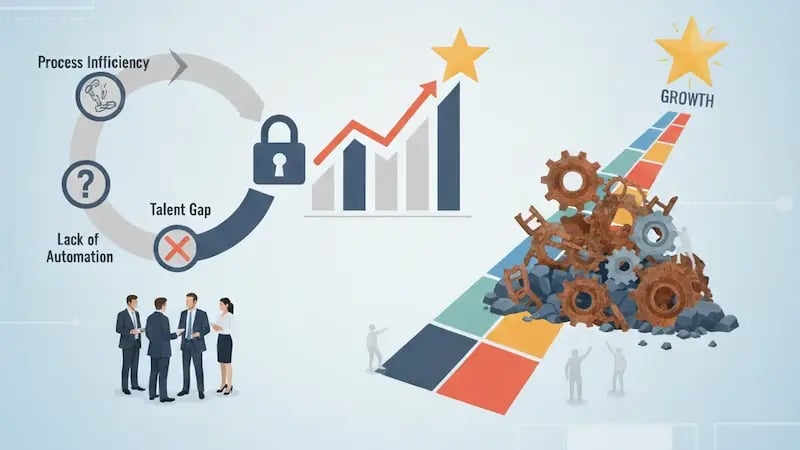
That drag usually comes from one place: an operational bottleneck. An operational bottleneck is any point in a workflow where the flow of work is impaired or stopped, creating a constraint that limits the capacity of the entire system. The annoying part is that these bottlenecks rarely look dramatic. They hide behind the excuse, "This is how we've always done it," or in a workaround someone created during a busy week that somehow became permanent.
Fixing these spots matters because removing one block often frees up more capacity than hiring another person or adding another tool. So what follows isn't theory. It's a list of ten growth killers we see over and over again, along with the fixes that actually work in the real world. Throw these into your business development plan and see what happens.
Challenge 1: Inefficient Workflow Processes
Remember the last time you watched a simple request bounce between five people before anything happened? That's what I'm talking about. Work gets dropped between teams, people redo the same thing three times, approvals sit in someone's inbox for a week, and everyone's in meetings trying to figure out what's going on.
Samuel Charmetant, CEO of ArtMajeur by YourArt, runs a global online art marketplace where thousands of artists rely on smooth operations so their work is actually seen, not lost in the system.
The biggest workflow problems rarely show up in dashboards. They show up when an artist asks why their work isn’t visible yet, or why a simple update took days. Every time we mapped a process end-to-end, we found extra steps added ‘just for now’ that had somehow become permanent. Cleaning those up freed more capacity than any new hire.
Want to try this? Grab a whiteboard and map out one process that drives you crazy. Ask the people doing the work where it gets stuck. You'll probably find handoffs that nobody owns, decisions that nobody's clear on, and steps that made sense five years ago but no longer do today.
Here's the thing about automation—don't throw tech at a broken process. Fix the flow first. McKinsey found that
Just improving how teams share information can boost productivity by 20-25%.
That's before you buy any fancy software.
Challenge 2: Lack of Resource Allocation
This one's tricky because it feels like you need more of everything, more people, more budget, more time. Usually, though, you've got enough resources; they're just in the wrong places.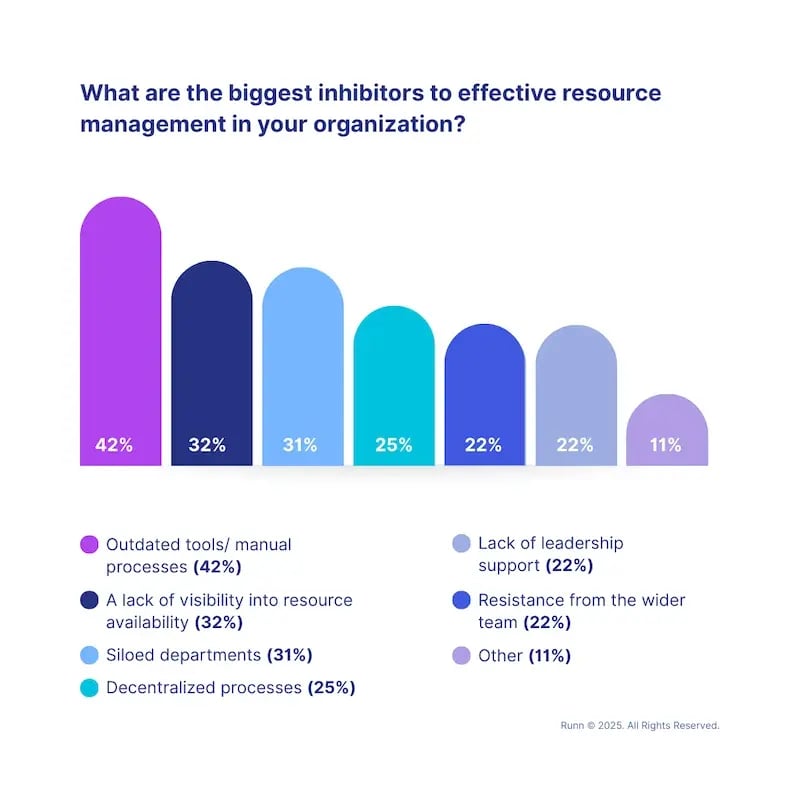
Try this: for one month, track where your team's time actually goes. Not what their job descriptions say, but reality. The same applies to budget—what projects are consuming money without clear outcomes? The old Balanced Scorecard approach still works here; connect work to real business goals so everyone knows why it matters.
Challenge 3: Communication Breakdowns
Bad communication clogs everything up. You've got urgent stuff buried in email, decisions happening in random Slack threads, and meetings where nothing gets decided.
The issue is that most companies have too many channels and no rules. Pick lanes and stick to them. Product decisions are made here, customer issues are addressed there, and weekly updates are maintained in this document. Sounds basic because it is.
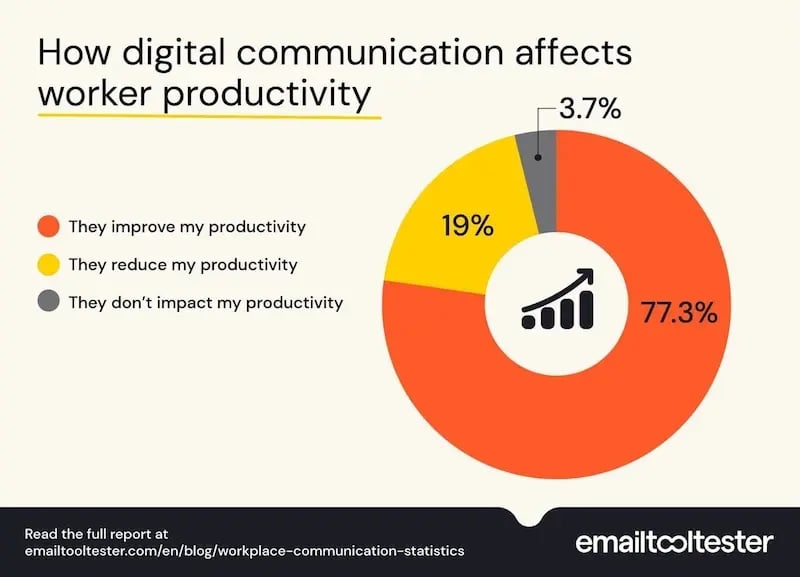
To fix this operational bottleneck, implement these practices:
- Set up your channels like traffic lanes.
- Keep meetings short and purposeful, such as daily stand-ups for quick syncs, and reserve longer sessions for addressing specific issues.
- Write down decisions so people can find them later.
Challenge 4: Inadequate Technology Utilization
I've seen million-dollar systems used as glorified spreadsheets and also seen teams running their entire operation on a spreadsheet that only one person understands. Both are problems.
Stanislav Khilobochenko, former VP of Customer Services at Clario, led teams helping people deal with spyware, hacked accounts, and stalkerware across millions of devices.
Every time we added a new tool, we asked two questions: does it remove manual steps for the frontline, and can a new hire understand it in a week? If the answer was no, it went off the list. The real bottleneck isn’t usually the technology itself, it’s fragmented data and half-trained people trying to glue systems together while customers are waiting.
Look at your tech stack honestly. What overlaps? What's missing? What would break if the one person who knows the magic spreadsheet were to leave tomorrow? Start small, fix integrations that eliminate manual data entry, train people on features they're not using, kill tools nobody touches.
Challenge 5: Overextended Leadership
If everything needs your approval, you're the bottleneck. Letting go is hard. But when you're drowning in tactical decisions, strategic thinking dies.
Leaders who can't delegate don't scale. The best ones create clear boundaries: 'you own this up to $X' or 'these decisions are yours unless Y happens.' Then they get out of the way.
Write down who decides what. Use something like RACI if you need structure, but keep it simple. Give people outcomes to own, not just tasks to complete. Block time for deep work, just as you would for your most important meeting.

Challenge 6: Poor Inventory Management
Inventory problems are sneaky. Stock too little, lose sales, and tick off customers. Stock too much, watch your cash disappear onto shelves. Small demand changes create huge swings up and down the supply chain. Economists call it the bullwhip effect.
Tom Rockwell, CEO of Concrete Tools Direct, supplies contractors who only care if the tool is on site, works on the day, and doesn't fail mid-pour.
Inventory becomes a bottleneck the moment your team starts guessing. We stopped treating stock as a warehouse problem and started treating it as a jobsite promise. The tools that keep projects moving get tracked daily. Slow movers earn their space, or they go. Once the data matched how crews actually work, stock-outs dropped, and we stopped tying up cash in the wrong products.
To improve poor inventory management, start with these basics:
- Sort your products by importance using ABC analysis.
- Set safety stock based on actual variability, not gut feel.
- Measure whether your forecasts are accurate to improve them over time.
- Consider just-in-time approaches where applicable.
- Ensure sales, marketing, and supply chain teams meet in the same room regularly, so surprises become rare.
Challenge 7: Rigid Organizational Structures
Old-school hierarchies made sense when change was slow and incremental. However, in current times, by the time a decision reaches five levels and then back down, the opportunity's gone. This is one of the most insidious growth challenges.
But don't blow up your org chart. Just create escape valves. Let teams form around problems, make decisions, then dissolve. Keep the hierarchy for what it's good at, coordination and accountability, but add flexibility where speed matters.
Try forming a small team around a single customer problem. Please provide them with a clear goal, a deadline, and the necessary authority to act. See what happens. Companies that get this right can respond to market changes without requiring the entire organization to pivot.
Challenge 8: Insufficient Market Analysis
Building stuff nobody wants is expensive. Yet tons of companies check in with their market once a year, if that. Markets don't wait for your annual planning cycle.
Your competitors change tactics monthly, and your customers' needs shift constantly. To avoid this operational bottleneck, make learning a habit, not an event:
- Conduct quick customer surveys every month. This will help you nail down the visitor's and buyer's intent, so you can target them with what they actually want to see.
- Conduct win-loss calls after every major deal.
- Check what competitors are doing on a weekly basis, not yearly.
- Ask customers what job they're really hiring your product to do, and the answer might surprise you.
- Actually use what you've learned when deciding what to build next.
Challenge 9: Financial Mismanagement
Nothing kills growth faster than running out of money. Yet companies are flying blind, with unclear margins, stretched payables, and hoping volume will fix profitability problems.
Most companies need three things: forecasts that accurately reflect reality, a dashboard that clearly shows what matters, and someone asking 'why' when numbers deviate.
Ditch the annual budget for rolling forecasts. Track the numbers that predict problems, not just report them, how fast you collect cash, which customer segments actually make money, and what it really costs to acquire a customer. See it coming, and you might be able to avoid it.
Challenge 10: Employee Retention and Morale
When people leave, everything slows down. So forget the ping-pong tables. People stay for growth opportunities, fair treatment, and managers who actually care.
James Robbins, Co-founder and Editor in Chief of Employer Branding News, spends his time tracking how layoffs, AI, and culture decisions land in the day-to-day of real teams.
When work keeps getting blocked by the same approvals or the same unclear priorities, people don’t describe it as a ‘process issue.’ They say the company doesn’t keep its promises. Bottlenecks are an employer brand problem as much as an operations problem, because they quietly teach your best people to stop believing what you say.
To improve employee retention and morale, focus on these actions:
- Conduct regular one-on-ones, which matter more than annual reviews.
- Create paths for people to grow without leaving, letting them know their career progression is essential.
- Celebrate wins specifically—for example, saying "great job on the Johnson account" beats "thanks for all you do."
The statistics below are straightforward yet revealing. 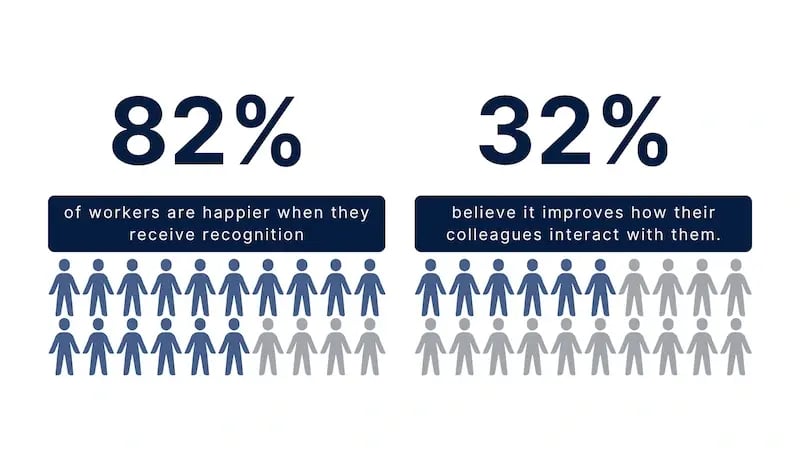
Moving Forward
Broken processes, misplaced resources, poor communication, outdated technology, overwhelmed leaders, inventory chaos, rigid structures, weak market intelligence, unclear finances, or people-related issues can cause bottlenecks. Every business is susceptible to these.
The fixes aren't magic either. See where work flows (or doesn't). Put resources where they matter. Communicate clearly. Use tech that helps, not hinders. Let leaders lead, rather than just being people who agree or disagree with others. Balance inventory with cash. Create flexibility. Stay close to your market. Know your numbers. Take care of your people.
To read more on business management and marketing, check out other articles on the Aspiration Marketing blog.






Leave a Comment
Have thoughts on this article?
Share your feedback, ask questions, or join the discussion with our community.