





In today's cluttered digital landscape, grabbing and holding user attention is a significant challenge. The solution is website personalization. Website personalization is a strategic approach that customizes website content, layouts, and user interactions based on an individual's data, behavior, and preferences. By speaking directly to users through this approach, you can create a more engaging and relevant experience.
When users notice that you cater to their interests, they are more likely to invest their attention, time, and money in your brand, leading to better marketing results. In fact, research shows that approximately 77% of users are significantly more engaged with a brand that provides a personalized content experience.


Understanding Website Personalization
Understanding this concept is crucial for modern marketers. Website personalization is not just a stylistic phrase; it is an important tool that hooks your customers and wins their loyalty. This process involves the customization of website layouts, user interactions, and all web content based on user data and past browsing history. It's about giving your website a personality that matches the interests of your users. This approach helps them affiliate more with your brand and build enough trust to make purchases, resulting in more conversions for you and greater satisfaction for them. Ultimately, effective website personalization creates a positive overall customer experience.
Types of Website Personalization
Website personalization isn't a one-size-fits-all strategy—it comes in different forms depending on how businesses want to create unique experiences for their visitors. Here are two of the most effective methods that help brands make a lasting impression:
Dynamic Content
Think about the last time you visited an online store, and it showed you product recommendations that matched your browsing history. That’s dynamic content in action. Instead of showing the same content to every visitor, dynamic content adapts based on a person’s preferences, behavior, and demographics. This ensures that every visitor sees something relevant rather than generic, one-size-fits-all content.
Examples of dynamic content in action:
- E-commerce websites recommend products based on what users have previously browsed or added to their cart.
- SaaS companies displaying tailored features or pricing plans depending on the visitor’s business type.
- News platforms suggest articles based on what a reader has previously read or searched for.
With dynamic content, businesses can deliver a truly personalized experience that keeps visitors engaged and increases conversions.
Overlays
Overlays are popups, banners, or modals that appear on a website, grabbing a visitor’s attention with a targeted message. When done right, overlays don’t feel intrusive. Instead, they feel helpful and timely, providing value exactly when the visitor needs it. The key is to trigger overlays based on user behavior rather than just randomly displaying them.
Here are some great ways businesses use overlays effectively:
- Exit-intent popups: Ever hovered near the close button and suddenly got an offer for a discount? That’s an exit-intent popup in action, trying to retain visitors before they leave.
- Welcome overlays: First-time visitors often see personalized greetings or exclusive offers, making them feel immediately valued.
- Cart abandonment reminders: If a visitor adds products to their cart but doesn’t complete the purchase, an overlay can remind them of their items and even offer a small incentive to finalize the order.
Overlays work best when they provide genuine value rather than interrupting the user experience. The goal of website personalization is to guide visitors toward conversion—not push them away.
The Importance of Website Personalization for Marketing Agencies
Why is website personalization trending? It is not simply a fancy touch to glamorize your website; it is a powerful technique that brings customization to individual users. Imagine opening a website and seeing content that resonates with you as if it were created with your interests in mind. In this advanced technological age, website personalization has become a necessity. Let's explore some of its benefits:
- Enhanced User Engagement: When you personalize user experience, you automatically earn their loyalty and interest. Content that's made just for a user makes them spend more time on that website and perhaps make purchases. This engagement boosts conversions.
- Improved Conversion Rates: Website personalization is a conversion powerhouse, with a documented 5-15% increase seen in conversions. What's great is the reduction of customer acquisition costs by 50%. When customers receive tailored content, they are more likely to become active buyers.
- Refined Targeting: Website personalization is focused on audience data. You collect user data in order to segment them into proper subgroups. After grouping them, you can customize your content according to what they like, pulling them deeper into the conversion funnel.
- Increased Customer Loyalty: Customers love a brand that cares for them and nurtures their needs. You can easily get a pool of loyal customers once you tailor content just for them.
Key Strategies for Effective Website Personalization
Marketing agencies require powerful strategies to properly implement website personalization. Let's examine some of the most effective approaches:
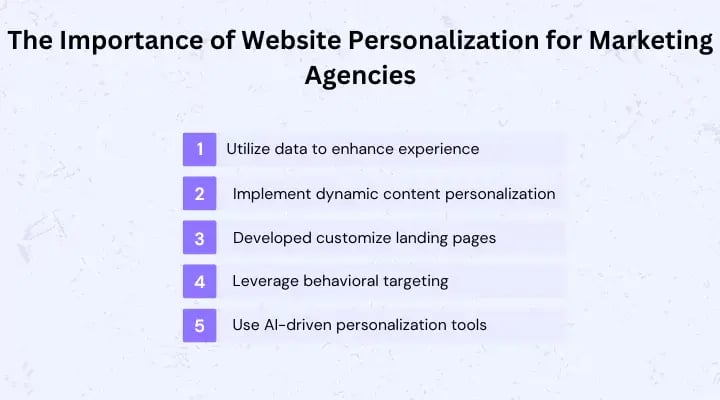
Utilize Data to Enhance Experiences
Incorporate extensive user data into your strategy. Analyze what users click on, what they have purchased previously, how long they spend on your site, and their general preferences. By keeping these data points and your business goals in mind, you can deliver a truly customized experience.
Implement Dynamic Content Personalization
Avoid bombarding your users with informational noise; instead, narrow down content to their specific interests. Approximately 81% of modern marketers strive to deliver a personalized experience in a competitive digital realm. To do this effectively, you must define your audience, collect their data, and then segment them into distinct subgroups for targeted content.
Develop Customized Landing Pages
Ensure that users find exactly what they're looking for on your landing pages. Know your audience and look into their data to know what they care about. Make them feel understood and welcomed. Research has highlighted that about 63% of users are positively impacted by customized landing pages and recommendations.
Leverage Behavioral Targeting
Focus on user behavior and look at key aspects like demographics and psychographics, along with their browsing and search history. These aspects allow you to scoop out authentic user data, making the personalization process easier and more effective.
Use AI-Driven Personalization Tools
The use of AI in our current domains is spreading like wildfire. AI and businesses have partnered to create personalized experiences for people. These computerized and fast-paced technological tools succeed in collecting user data in real-time and represent one of the most successful customization strategies of today.
Challenges in Implementing Website Personalization
While website personalization offers significant upsides, implementation is not always easy. Let's review the common challenges:
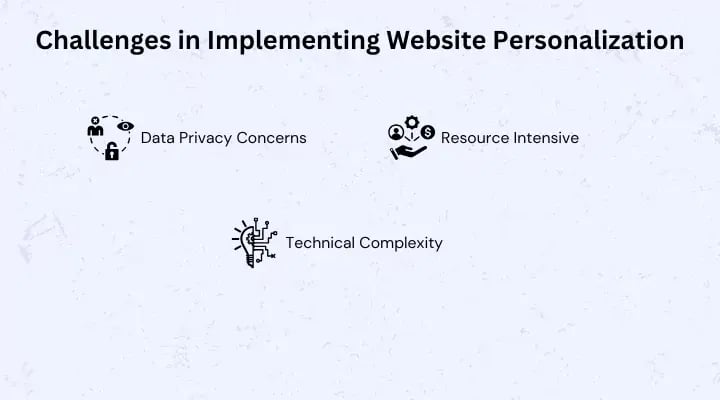
- Data Privacy Concerns: Collecting user data comes with privacy risks. You must ensure that all rules and privacy laws are being followed when collecting user data. Keep it ethical and in compliance with the law.
- Resource Intensive: Personalization is a very time-consuming and resource-centered task. You'll need significant resources and the right tools to get it done.
- Technical Complexity: Developers are often faced with technical challenges when it comes to implementing personalization across different platforms. Bugs and glitches can disrupt the personalization process, and constantly keeping up with dynamic user behavior can be technically challenging.
Overcoming Challenges: Best Practices
Fortunately, solutions are available. The following best practices can help minimize and manage these challenges:
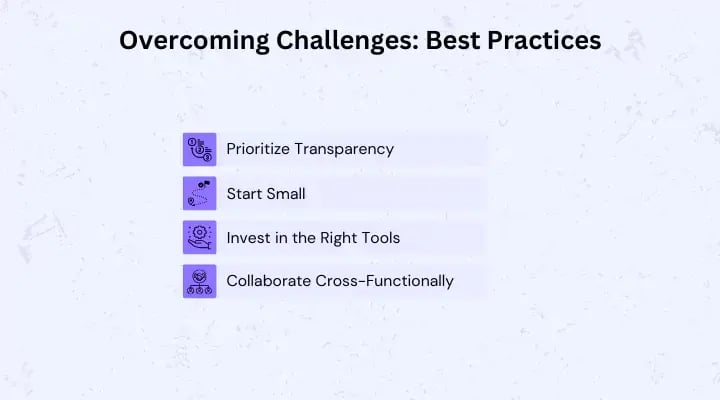
- Prioritize Transparency: When you're collecting user data, be honest with your users about it. Give them control over their privacy and provide them with choices. Specify why their data is being collected in the first place.
- Start Small: Take baby steps. Begin by implementing small, manageable personalization tactics. Gradually move towards more complex strategies as you go along collecting data.
- Invest in the Right Tools: Ensure the tools that you use for personalization align with your current software and systems so that your business can grow smoothly.
- Collaborate Cross-Functionally: Teams working at different levels need to collaborate and comply with each other so that personalization efforts run smoothly.
Real-World Examples of Successful Website Personalization
Many smart businesses saw website personalization as a gateway to success. You have likely heard of, and perhaps even used, these successful services:
Amazon
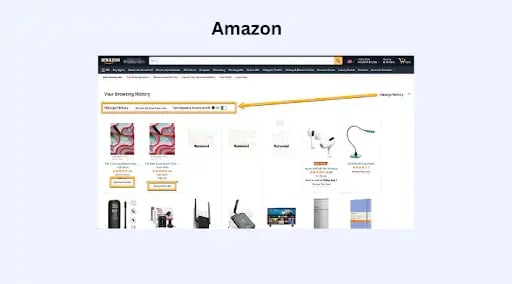
Amazon is a master of personalization. The platform analyzes search and purchase history to tailor recommendations. It succeeded in delivering content that users wanted, owing much of its current success to this website personalization strategy.
Netflix
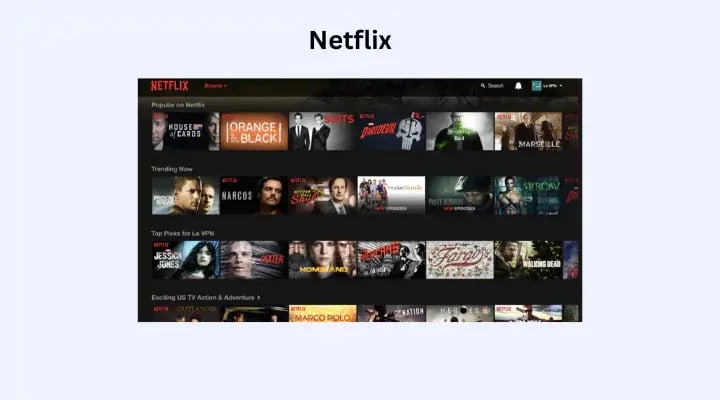
Netflix is another successful business that uses personalization effectively. What's best is that it analyzes search and watch history to deliver personalized recommendations, making it seem as if Netflix knows its users perfectly.
Spotify
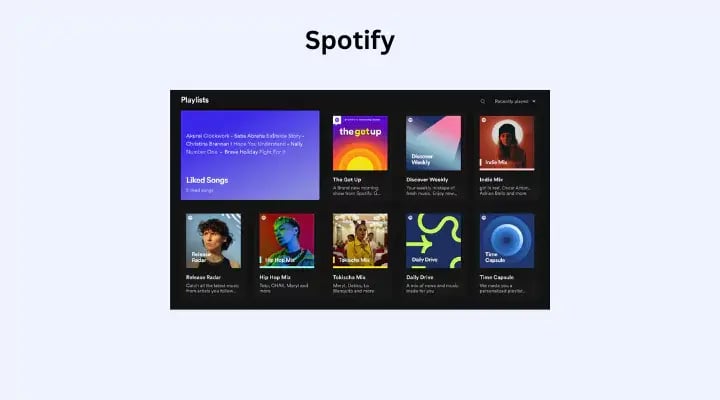
Spotify is an app that has shaken the music world. By analyzing listening history and with unique offers like the “Discover Weekly” playlist, users get the genres they love and enjoy, delivered through effective personalization.
The Future of Website Personalization
We are living in a technological age, with trends constantly evolving and redefining what website personalization is. The current trends speak for themselves:
- Hyper-Personalization: New and advanced technologies are emerging rapidly, like machine learning and AI, which are being fused with digital marketing to bring personalization to the forefront.
- Voice Search Optimization: AI is crossing new technological boundaries, with AI voice assistants mimicking human tone and voice to deliver personalized search experiences for everyone.
- Predictive Analytics: AI is a powerful future-facing tool with excellent predictive capabilities. It can anticipate what users want with top-notch speed, sometimes before they even realize it themselves.
Conclusion
To wrap it up, website personalization in web design is a marketing agency's best friend. It is a tool that has revolutionized the entire concept of a website and how users interact with it. Website personalization attracts the right audience and presents them with a customized experience so they end up coming back multiple times. This technique has boosted conversion rates since users love a personalized experience and often become loyal customers.
Ready to Transform Your Website?
If you want to enhance your business's presence, you must include personalization at the grassroots level on your website wherever it's implementable. Analyze those areas and don't miss out on the chance to give your users a welcoming and supportive experience. In this way, you can turn these users into your most loyal customers who truly love your brand.
Looking to incorporate personalization into your growth-driven design website strategy? Contact Aspiration Marketing and see how we can turn your website into a lead generation machine.




Leave a Comment
Have thoughts on this article?
Share your feedback, ask questions, or join the discussion with our community.