





Choosing an inbound marketing agency for logistics software in Germany is fundamentally different from hiring a generalist B2B agency. In the DACH region, the stakes are higher, and the buyers are far more discerning. Your buying committee expects native German-language messaging, DACH-specific compliance awareness, and targeted positioning that resonates directly with procurement, IT, and operations teams at freight forwarders or 3PL operators.
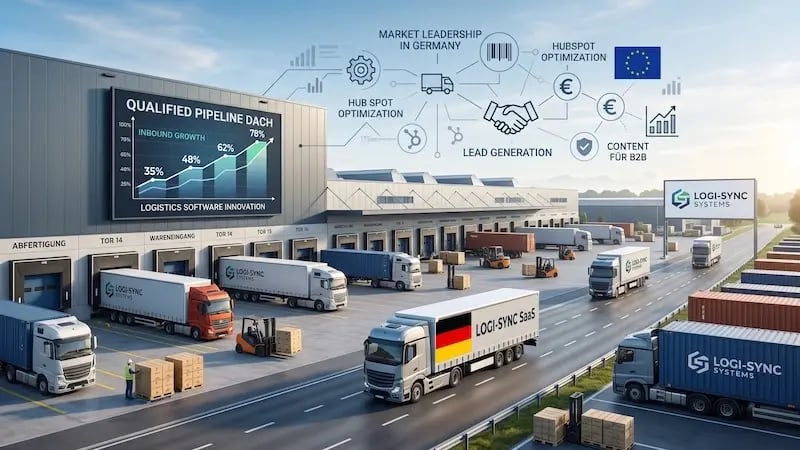 Meeting these specific requirements is critical early in the journey:
Over 60% of B2B buyers now finalize purchase decisions based solely on digital content before ever speaking to a sales representative.
If that content fails to hit the right technical notes or lacks local nuance, your pipeline stalls before your sales team can engage.
At Aspiration Marketing, we help supply chain SaaS companies build inbound programs that generate qualified pipeline across complex, multilingual markets. This article walks you through the core evaluation criteria that separate a capable, logistics-aware agency from one that burns through budget on generic campaigns.
Below, you will find ten questions to ask before signing a contract—each tied to a specific capability gap that can derail your marketing results.
Questions Logistics SaaS Providers in Germany Should Ask Their Agency
To help you evaluate candidates, work through these ten essential questions to uncover whether an agency has the technical depth, regional knowledge, and execution skills your growth goals require.
1. Do You Have Case Studies from Logistics or Supply Chain Software Companies?
A generic portfolio tells you very little about an agency's ability to convert freight management or warehouse automation buyers. Ask for specific campaigns from the logistics vertical with named client outcomes.
Look for work that addresses long B2B sales cycles common in supply chain software. Agencies that have run campaigns for TMS, WMS, or ERP vendors will understand the technical language your buyer personas expect.
Request metrics such as cost per MQL and pipeline contribution, rather than vanity metrics like traffic or impressions.
2. Can You Create Native German-Language Content, Not Just Translations?
Translated content often misses the tone and technical nuance that German logistics professionals expect. Direct translation of English marketing copy often sounds unnatural in the DACH market, reducing engagement and credibility with your target accounts.
Ask whether the agency employs native German writers or relies on structured multilingual marketing workflows that include cultural adaptation.
According to HubSpot's 2026 State of Marketing report,
Marketers who localize content for specific regions see stronger audience engagement than those running translated-only campaigns.
3. What Level of HubSpot Certification Does Your Team Hold?
HubSpot is the dominant CRM and marketing platform for mid-market SaaS, and your agency needs more than a badge on the website. Ask how many team members hold certifications in Marketing Hub, Sales Hub, and HubSpot implementation.
An agency that can configure lifecycle stages, lead scoring models, and multi-touch attribution reporting inside HubSpot will save you months of ramp-up time. Check the agency's HubSpot Solutions Partner tier for an objective, third-party signal of depth. Also, ask how they handle CRM data migration for clients switching from other platforms.
4. How Do You Approach Demand Generation for Niche B2B Software?
Logistics SaaS operates in a niche where your total addressable market is specific and finite. Generic lead generation tactics like broad display ads or mass email blasts will burn through your budget without producing a qualified pipeline.
Ask the agency to explain their account-based marketing (ABM) or intent-based targeting strategy for small addressable markets. Agencies experienced in niche SaaS verticals will pair ABM with content programs that build topic authority, so your brand surfaces when buyers research solutions in your category.
5. Do You Understand the Logistics Buying Committee Structure?
Supply chain software purchases typically involve stakeholders from IT, operations, finance, and procurement. Each of these roles evaluates your product through a different lens. Your agency needs to map content and campaigns to every role in the buying committee.
According to Gartner,
Complex B2B software decisions now involve an average of 6 to 10 decision-makers, each bringing independent research to the table.
Ask how they develop persona-specific content for technical evaluators versus budget approvers. An agency that can only produce one type of content will leave gaps in your funnel. Multi-persona content strategies accelerate deal velocity by engaging the full committee at each stage of the buying process.

6. What Is Your Experience with DACH-Specific Compliance and Data Privacy?
Marketing in Germany means operating under strict GDPR enforcement and ePrivacy regulations that go beyond what US-based agencies typically handle. Cookie consent, double opt-in for email, and data processing agreements are non-negotiable requirements for any campaign targeting German prospects.
Non-compliance is not an option:
Strict GDPR enforcement across Europe can result in fines of up to €20 million or 4% of annual global turnover, making regional regulatory compliance an operational imperative.
Ask the agency to walk you through their compliance workflow, from consent collection to data storage. Agencies without documented GDPR experience in the DACH region can expose you to regulatory risk and erode the trust you are trying to build with prospective buyers.
7. Can You Show Measurable Pipeline Impact, Not Just Traffic Growth?
Traffic reports look impressive in monthly dashboards, but they do not tell you whether marketing contributes to revenue. SaaS marketing requires closed-loop attribution from first touch to closed deal, connecting every campaign to the actual pipeline.
Ask the agency to define which RevOps metrics they track and report on: MQL-to-SQL conversion rate, pipeline velocity, customer acquisition cost, and marketing-sourced revenue. An agency that defaults to reporting on impressions and clicks is not aligned with SaaS growth goals. Request a sample dashboard or reporting template.
8. How Do You Align Sales and Marketing Inside Our CRM?
Disconnected sales and marketing teams create duplicate effort, lost leads, and conflicting messaging. Before you sign, ask how the agency structures the handoff of marketing-qualified leads to your sales team within your CRM.
The answer should include specific configurations: lead scoring rules, automated notifications, service-level agreements between teams, and account-based marketing workflows. Agencies that treat the CRM as a marketing-only tool will not help you close deals faster or improve your overall sales and marketing alignment across the revenue team.
9. Do You Have a Content Strategy for SEO and AI Search Visibility?
Organic search and AI-powered answer engines are now primary research channels for B2B software buyers.
In fact,
50% of B2B software buyers now begin vendor research inside AI chatbots rather than traditional search engines.
Your agency needs to optimize for both traditional SEO and answer engine optimization (AEO) to capture demand where your buyers are looking.
Ask whether they structure content for featured snippets, AI citations, and topic authority clusters. An agency that focuses solely on keyword rankings without an AEO strategy will miss the growing share of traffic from AI-generated answers and from inbound marketing channels that rely on structured data.
10. What Does Your Onboarding Process Look Like for a Logistics SaaS Client?
A vague onboarding plan signals that the agency will spend your first quarter learning your industry instead of generating results. Ask for a documented onboarding timeline with specific milestones tied to deliverables.
Expect to see a discovery phase covering your ICP (Ideal Customer Profile), competitive positioning, and content audit. Campaign deployment should follow in four to six weeks.
Agencies experienced in logistics SaaS will have a templated approach that accelerates time to first results. Ask how quickly they delivered a pipeline for a comparable client.
How to Select the Right Inbound Agency for Your Logistics SaaS Company
The ten questions above give you a framework to separate logistics-savvy agencies from those that treat every B2B SaaS company the same way. Focus your evaluation on vertical expertise, HubSpot depth, native German content capability, and measurable pipeline metrics.
Aspiration Marketing delivers inbound marketing programs built for supply chain and logistics software companies operating in the DACH market. From multilingual content creation to HubSpot CRM configuration, the team brings sector-specific experience that accelerates your path to qualified pipeline.
Short on time or looking for deeper expertise? Schedule an introductory call with a logistics marketing specialist to discuss your agency evaluation criteria.





Leave a Comment
Have thoughts on this article?
Share your feedback, ask questions, or join the discussion with our community.