





With the year approaching, marketers are finding new ways to better attract and engage with current and potential consumers. Staying current on what's new and next helps ensure that your strategies are current and influential. As we look ahead, we are already seeing some trends in marketing; let's pick on content as one of the core marketing pillars.
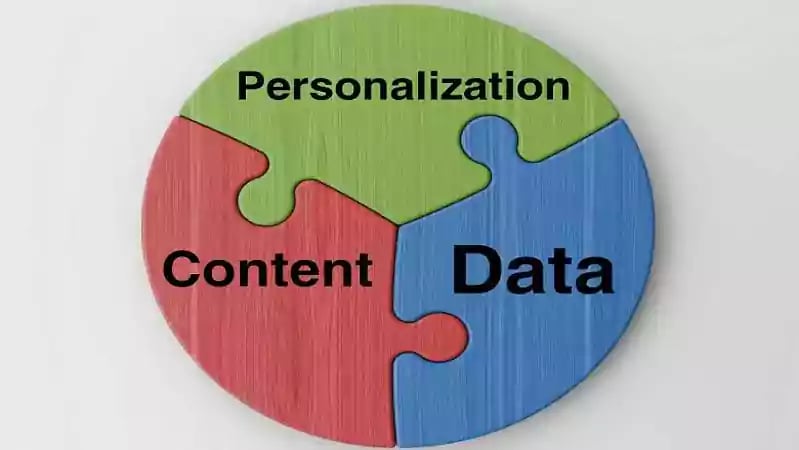
Content marketing is a strategic approach that involves creating and distributing valuable, relevant content to attract, engage, and retain a target audience. It is a powerful tool not just for driving sales and business growth, but also for establishing trust and building meaningful connections with your audience by providing valuable solutions to their problems. With the constant evolution of innovative technology and communication channels, the importance of a solid content marketing strategy shows no signs of slowing down anytime soon.
#1 Get your strategy in place.
Content strategy
A content strategy is a comprehensive plan that outlines the creation, publication, and governance of useful and usable content. At first glance, having one may seem self-evident; however, the numbers suggest otherwise. Back in 2017, a survey by the Content Marketing Institute concluded that a staggering 63% of businesses that use content marketing don't have an actual strategy. That means that
over half of the content being put out is neither good content nor has any purpose other than bulking up the company's page count.
That's terrible news for those companies but great news for you. Do your research, look at your competitor's sites, and see if you can find the strategy behind their content. Chances are there isn't one, so take some of the topics they're covering and cover them better.
Data-Driven Strategy
A data-driven strategy is an approach where decisions are based on the analysis and interpretation of data rather than intuition. In content marketing, this has become more valuable than ever. The success of your content creation is not left to chance but is a result of researching what works and what doesn't. With numerous analytical tools, marketers can consistently evaluate their content strategy. Blogging is an essential component of a robust strategy. By analyzing key performance metrics, marketers can gain insight into how to refine future content. These metrics include:
- Bounce rate
- Time per page view
- Entrances
The data behind content marketing offers a unique perspective into the potential consumer's mindset and helps drive them toward purchasing.
#2 Leverage Chatbots & Artificial Intelligence.
Artificial intelligence (AI) is a field of computer science dedicated to creating systems that can perform tasks that typically require human intelligence, such as learning, reasoning, and problem-solving. AI is being used increasingly by nearly all businesses, whether you know it or not. It serves as an opportunity to meet your company's bottom line and allow you to allocate your time more efficiently. For instance, chatbots used to be seen negatively whenever they popped up on a website. Well, not anymore. Should you be looking to implement an AI Chatbot?
Chatbots have come a long way from the newest bot called ELIZA in 1966. Created by Joseph Weizenbaum, the chatbot laid the fundamentals for future innovations using preprogrammed responses, phrases, and keywords (though it didn't pass the Turing Test, i.e., the test of users believing they were interacting with an actual person). Fast-forward a few decades, AI interfaces like Siri, Alexa, and Google are becoming history, and generative AI, ChatGPT, Bard, and company are everywhere.
Chatbots, automated posting tools, and the like are set to revolutionize the content marketing world as they have done in customer service and other areas. These tools won't be replacing you or your team any time soon. They will make your jobs much more accessible by taking the rote, mundane, repetitive tasks off your plate so you can focus on the creating side.
The technologies underpinning AI, specifically "natural language processing," ChatGPT, Bard, and company have advanced so that transactional and FAQ-type interactions can be fully automated. Often without the customer even realizing that they're talking to a bot.
AI-Supported Content Generation was hardly a thing in 2022; you're left behind if you are not involving AI in your creation efforts today.

#3 Create Authoritativeness With Topic Clusters.
Topic clusters are an SEO strategy that organizes content around a central topic, linking multiple related content pieces back to a primary pillar page. This model has become an essential part of demonstrating authoritativeness in SEO; a content strategy with topic clusters defines specific topics with keywords relevant to a particular pillar page.
What's driving this change is how people make inquiries on Google and other search engines. It used to be that people would search just one word or two in a search bar like "Florida Hotel." Nowadays, people are searching for more precise phrases like "What's the best hotel in Florida?" Marketers want to ensure they're not just writing about one topic and squeezing in as many keywords as possible.
The topic cluster approach is about breaking down one broad topic into several subcategories to create effective content that will keep the search engine algorithms happy and answer the question or solve the website visitor's problem.
#4 Be Mobile-friendly.
Closely related to the last item, more and more people are using mobile devices as their primary internet device (at least for non-work related use). So while optimizing your content for easy voice search, put some time into ensuring everything renders correctly on smaller screens—bonus points for this one since Google ranks mobile-friendly sites higher.
#5 Personalize and Engage.
Those visiting your site or engaging with your business want to feel special. As we discussed earlier, they don't want a chatbot giving them a perfunctory answer that leaves a lot of gray areas and much to be desired. How content is becoming interactive and personal is crucial to engage with potential consumers. For example, according to WhiskData, there's a 26% increase in open rates of emails with personalized subject lines (e.g., including the recipient's first name). It shows that personalization can go a long way in garnering someone's attention! We're seeing marketers take interacting with consumers to new heights that benefit both parties. Polls and surveys are a great way to engage because you're not only getting a visitor's attention, but you're also getting their contact information and valuable data. This can help you to further re-target your consumer to continue providing them with the content that they want.
#6: Go omnichannel.
Omnichannel marketing is a strategy that involves integrating your brand's presence across multiple platforms to create a seamless, unified customer experience. This includes your website, social media channels, and any other virtual touchpoints. To execute an effective omnichannel strategy, you should:
- Ensure your brand voice is consistent on all channels.
- Use the same, easily identifiable logo, regardless of screen size.
- Always link to all the right places to create a connected user journey.
Thought about experimenting with a podcast or live-streaming? This is the time to do it!
Take a look at video.
With the increasing availability of high-bandwidth connections, especially from mobile devices, a correlated uptick in video content has come. People like being entertained, and when they're sitting on the bus or at lunch, looking at their phones, this increasingly means they like videos.
Just remember to keep it short and to the point. People watch videos to stave off boredom, so don't turn around and bore them with overly lengthy video content. Even if you aren't interested in making your videos, consider incorporating them into your content.
Listen to voice search.
With the rising usage of voice assistants, more and more consumers are using voice search for their internet needs. This means businesses need to do more than pay attention to long-tail keywords since they're built around historical text search data and not how people speak in the real world. It means optimizing your SEO for the grammatically incorrect spoken sentences people will use when asking Siri to find information.
#7: Prove your worth.
Metrics are on the rise, and with more and more companies wanting to tie revenue results to their content marketing efforts directly, they've never been more critical to the content marketer. Brand awareness is still a thing to consider; however, it is no longer the be-all-and-end-all it once was. Now, you have the complex data to back up your assertions about the worth of your team's efforts. Engagements and interactions are the metrics of choice for the future.

#8: Remarketing to improve conversions.
Remarketing is a digital marketing tactic that enables you to show targeted ads to users who have previously visited your site but did not convert. When someone visits your site, the cookie includes information on which specific article they read and what terms they searched to get there. Then, if you're participating in a remarketing program, they will be shown ads for other content related to that initial piece.
It's important to remember that, on average, 6-8 touches are required before an ordinary site visitor converts to a viable lead. Remarketing is a fantastic way to improve conversions and to increase that touch count without much extra work since you already have the user data to set up a remarketing campaign.
Considering these content marketing trends, it's also important to remember the old standards that aren't going anywhere. Stalwart habits that will continue to serve your content marketing efforts well include:
- Refreshing and updating existing content.
- Publishing new evergreen content.
- Continuously optimizing for SEO.
Balance is critical to everything, and that's just as true for content marketing as every other aspect of life. For all the "tips and tricks" articles, you can find at least two others contradicting whatever they say. The real trick is balancing trying the latest and greatest and sticking with what you know works.
There are countless opportunities for marketers today to build an engaging experience for those who come into contact with their business. From cutting-edge technologies like AI, to data-driven strategies and personalization, content marketing is an excellent foundation for unmatched ROI.





.webp?width=600&height=375&name=HubSpot%20Customer%20Agent%20Set%20Up%20(1).webp)

Leave a Comment
Have thoughts on this article?
Share your feedback, ask questions, or join the discussion with our community.