




Let's be direct: is your nonprofit truly maximizing its impact, or are you spending precious time wrestling with disorganized spreadsheets rather than fulfilling your mission?
In the nonprofit world, the work is intensely relational. You rely on deep, personalized connections with a complex network of people: donors, volunteers, beneficiaries, and grantors. These relationships are the lifeblood of your organization.
Yet, many teams rely on a generic Customer Relationship Management (CRM) system. A CRM for the nonprofit industry is a technology platform designed to manage and nurture the complex relationships with donors, volunteers, and supporters. Many generic CRMs treat these vital contacts as static, one-dimensional records—simple entries in a database. This outdated approach falls short, preventing you from seeing the complete picture of a supporter's value.
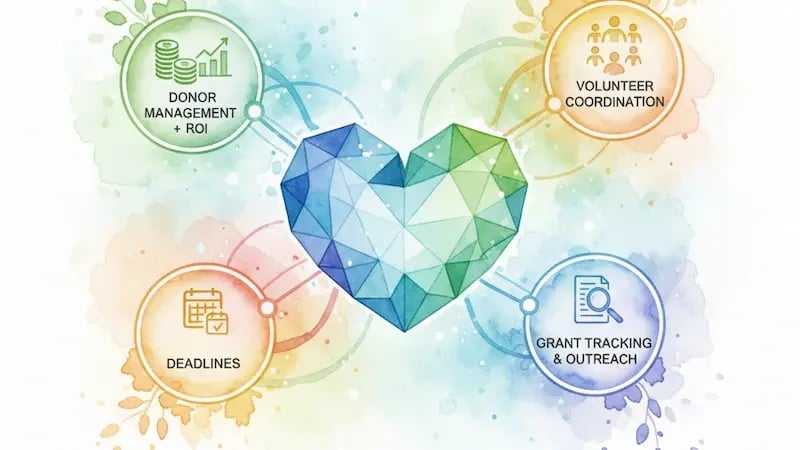
This is not simply about managing a list; it is about building a scalable relationship engine. You need a unified, intelligent platform—a powerful HubSpot CRM—that's specifically designed for relationship complexity, not just transaction tracking.
While many tools promise basic donor management software, few offer the dynamic power and unification of the HubSpot platform. This system provides the essential, integrated tools—such as smart properties and centralized Marketing, Sales, and Service Hubs—that enable nonprofits to finally build genuine loyalty, scale outreach efficiently, and truly understand their entire community.
The Cost of "Dirty Data" in the Nonprofit Sector
The most dedicated nonprofit teams often struggle with the same core problem that plagues the for-profit world: bad data. Dirty data is information that is fractured, outdated, incomplete, or inconsistent across systems. When supporter data is fractured, your entire operation slows down.
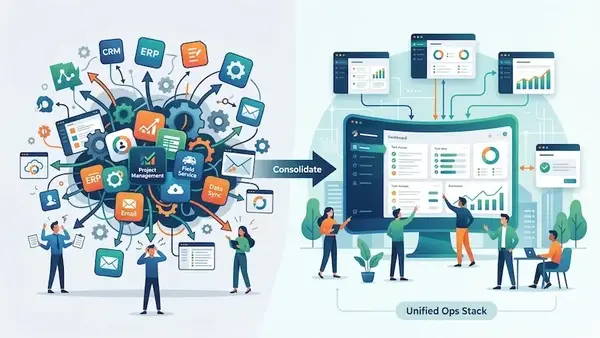
Think about the time you spend jumping between systems. Your donor records live in one place, volunteer hours in another, and the communications history for your major grantors is stuck in a separate email platform. This prevents you from ever achieving that crucial 360-degree view of your supporters.
Consider this data:
- Data Decay is Real: Studies consistently show that nearly 40% of CRM data becomes outdated every single year. Ask yourself: What does a 40% decay rate do to your recurring donor list or your lapsed volunteer contacts? You are basing critical outreach decisions on information that is probably wrong.
- The Incompleteness Hurdle: Estimates suggest that up to 91% of CRM data may be incomplete. This lack of information leads to generic, impersonal communications that waste both time and valuable resources.
When you cannot connect a person's volunteer history to their giving history, you miss crucial context. How can you confidently ask for a major gift when you are unaware that the contact just logged 20 hours of volunteer time for your latest event? A fragmented system kills the opportunity for genuine connection.
For a consideration-stage audience, the shift is clear: you need to move beyond a basic CRM for your nonprofit. It's time to stop thinking of your software as a "digital filing cabinet" and start viewing it as an "active engine for growth" that supports your whole mission.
HubSpot CRM's Dynamic Difference: Intelligence Over Inventory
What exactly makes the HubSpot CRM stand out in the nonprofit industry? The answer is its ability to turn static inventory into active intelligence.
The key to this transformation is the native power of smart properties. Smart properties are dynamic data points in the HubSpot CRM that calculate, update, and score information automatically based on real-time activity.
Calculated Properties for Financial Clarity
The most immediate benefit is enhanced donor management software. You need to know the true value and potential of your supporters instantly.
- Example: Lifetime Donor Value (LDV). Imagine an automatically calculated property called "Lifetime Donor Value (LDV)" that updates after every single contribution. This provides instant, up-to-date figures that are crucial for effective segmentation and identifying high-potential contacts for upgrade campaigns.
- The ROI of Focus: The average return on CRM investment is often cited as $8.71 for every dollar spent. For nonprofits, this massive return comes not from the software itself, but from the improved targeting and donor retention it enables.
Score Properties for Engagement and Intent
How do you know which volunteer or donor lead is most engaged right now? You use score Properties.
- Example: Volunteer Engagement Score. Set up an automatically updating score property called "Volunteer Engagement Score." This score increases each time a person opens a specific event email, signs up for a shift on a landing page, or downloads a campaign guide. A high score flags a contact who is primed for a bigger commitment.
This way, your efforts can focus on contacts who are truly ready to give, rather than sending general pleas to everyone, which can burn goodwill along the way.
True Relationship Segmentation with Smart Lists
Traditional CRMs use static lists—snapshots of data that are immediately outdated. HubSpot uses Smart Lists, which are dynamic segments that update themselves in real time as supporter data changes, ensuring your marketing and development teams are always targeting the right people with the right message.
- Example: Create a smart list called "Lapsed Donors with High Volunteer Score." This list automatically pulls contacts who haven't donated in the last 18 months but have actively volunteered in the last 60 days. This segment is dynamic, allowing you to send a highly personalized, volunteer-centric ask—not a generic one that ignores their commitment.
- Data-Driven Personalization: Personalized calls-to-action (CTAs) outperform generic ones by a staggering 202%. Using Smart Lists to make your messages hyper-focused directly translates to higher conversion rates for both donations and volunteer sign-ups.
From Insight to Impact: Nonprofit Use Cases in Action
The true value of the HubSpot CRM is in how it allows nonprofits to implement proactive, mission-focused strategies. The platform is built for the dynamic, real-world challenges your organization faces every day.
Use Case 1: Targeted Donor Nurturing and Personalization
Generic mass emails lead to donor fatigue and low engagement. Your supporters want to feel seen and valued, not just added to a list.
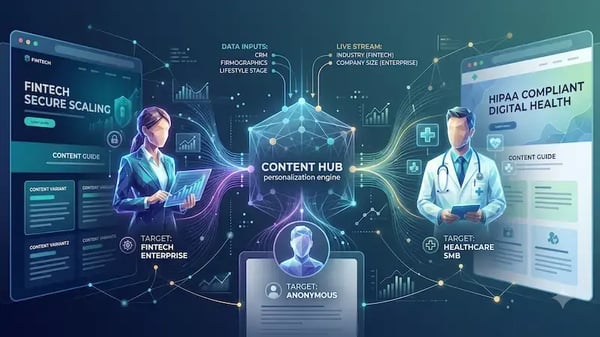
HubSpot Solution: Smart Content and Segmentation: Use a Smart Property like "Recent Donation Size" to personalize the content of a donation request email or a website banner. This is essential for effective fundraising automation.
Example: A contact with a history of less than a $100 gift sees messaging focused on the immediate, tangible impact of small monthly giving. Conversely, a contact with a history of over $1,000 in gifts sees case studies and content focused on long-term program sustainability and major giving opportunities.
The Engagement Edge: 71% of customers want personalized interactions, and your supporters expect the same level of respect. This targeted approach is proven: personalization can raise overall income by 10–15% for organizations that get it right.
Use Case 2: Streamlining Volunteer Coordination and Retention
Volunteer turnover is costly, and disorganized coordination burns out staff. You need a reliable system for volunteer management.
HubSpot Solution: Integrated Service and Data Hubs: The HubSpot CRM allows you to manage volunteers like VIP customers.
Example: When a volunteer submits a scheduling form (via a HubSpot landing page), the system automatically creates a task ticket in the Service Hub, assigning it to the Volunteer Coordinator. Automation sends out personalized shift reminders and updates the "Days Since Last Shift" Calculated Property. This active, automated customer service approach directly improves retention.
Retention Matters: Research shows that businesses using a CRM have seen customer retention rates go up by 27%. Applying this principle to volunteers means keeping your most valuable, engaged supporters for the long term.
Use Case 3: Grant and Major Gift Tracking
Grant writing and major gift asks are complex, multi-stage processes. Relying on manually updated spreadsheets to track application stages and reporting deadlines is a recipe for missing funding opportunities.
HubSpot Solution: The Deal Pipeline: The Sales Hub allows you to treat a grant application or a major gift ask as a "deal." This allows you to track multiple touchpoints to make sure you're not missing anything.
Example: Customize the sales pipeline stages to reflect your funding process (e.g., "Grant Research," "LOI Submitted," "Proposal Draft," "Reporting Due"). Use automated reminders tied to specific dates in the grant contact record to ensure deadlines are never missed. This built-in process for organizational accountability maximizes your funding opportunities and provides clear pipeline visibility to your board.
Use Case 4: Ensuring Nonprofit Data Integrity
Your CRM is the central nervous system of your mission. If the data is bad, the mission is compromised. HubSpot's approach to data integrity is ideal for the nonprofit world because it's proactive rather than reactive.
HubSpot Solution: Data Hub: While the core CRM tracks interactions, the Data Hub automates the cleanliness of your data. It can automatically check for and standardize properties, correct formatting errors (e.g., ensuring all phone numbers use the same format), and sync data in multiple directions, across integrated systems. This is how you move from fragmented systems to a single source of truth, making sure your personalized outreach is always based on clean, reliable information.
Future-Proofing Your Mission: Scalability and Growth
Ultimately, choosing a HubSpot CRM is choosing to future-proof your nonprofit.
The platform's open ecosystem enables seamless integration with the tools you already use, including donation processors, accounting software (such as QuickBooks), and communication platforms. This ends the reliance on disparate systems, eliminating the headache of manually stitching data together.
Crucially, as your nonprofit grows—launching new campaigns, expanding into new geographic areas, or starting new programs—the HubSpot platform scales with your mission without requiring an expensive, painful overhaul of the entire system. This focus on long-term sustainability and efficiency is crucial for nonprofits with limited budgets and growing demands.
Unlocking Your Nonprofit's Full Potential
The choice of a CRM in the nonprofit industry is no longer just an administrative decision; it's a strategic one.
The HubSpot CRM stands out because it solves the core issue of fragmented data, enabling hyper-personalized engagement with your donors and volunteers while automating and streamlining critical administrative and fundraising tasks. It transforms your data from a costly burden into a dynamic asset that drives every aspect of your mission.
Are you ready to stop letting an outdated, static database limit the potential of your dynamic mission? Transitioning to an intelligent, unified platform is the most critical step you can take toward becoming a truly data-driven organization.
To truly maximize the platform's potential and tailor its sophisticated features to the unique and complex needs of nonprofit operations, partnering with an expert is invaluable. Aspiration Marketing specializes in implementing and optimizing HubSpot solutions, helping organizations like yours gain the deep insights necessary to achieve sustainable growth and accelerate your mission’s success.



Leave a Comment
Have thoughts on this article?
Share your feedback, ask questions, or join the discussion with our community.