





In a hyper-connected marketplace, where information—and misinformation—travels at the speed of light, credibility isn't a bonus; it's the fundamental cost of entry. If you're a business leader or marketer, ask yourself this: "What is the true cost of a potential customer choosing a competitor simply because they appear more reliable?"
The answer is simple: Revenue.
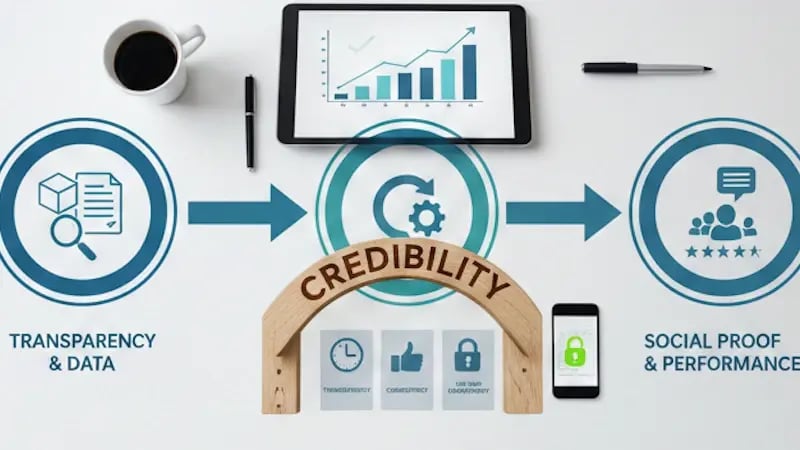 Trust is the currency of conversion. It's the metric that determines whether a consumer moves from mere brand awareness to active consideration.
Consider this critical insight:
81% of consumers need to trust a brand to even consider buying from it.
This statistic confirms that establishing brand credibility is the prerequisite for generating revenue, not a happy byproduct.
Earning true credibility requires moving beyond marketing platitudes and implementing a systematic, data-driven suite of trust strategies. This guide is designed for leaders already exploring solutions—the ones in the consideration stage of their journey—and presents three essential, actionable pillars for architecting digital brand authority that not only attract but also retain the modern, skeptical buyer.
The Trust Imperative: Understanding the Modern Credibility Landscape
For decades, credibility was defined by simple longevity or a powerful mission statement. Today, that definition has undergone a fundamental revision.
Brand credibility is the proven ability to deliver on promises, backed by verifiable performance and unwavering transparency. It's no longer about telling people you're trustworthy; it's about proving it with every interaction.
We are currently operating in the "skepticism economy." Consumers are highly sophisticated and often actively look for reasons not to trust. They assume a brand is trying to sell them something, and they scrutinize the digital footprint for contradictions or weaknesses.
This environment is precisely why authentic action is non-negotiable.
86% of consumers believe authenticity is vital when deciding which brands they like and support.
When your brand's actions align seamlessly with its stated values, you build a robust foundation of digital brand authority. This foundation is reinforced by verifiable performance and proof points, moving the consumer past skepticism and into the consideration stage.
Strategy Pillar 1: Architecting Transparency through Data Integrity
When trust is the goal, transparency is the engine. But how do you turn the threat of consumer data skepticism into a competitive advantage?
The modern consumer understands the value of their personal data and penalizes brands heavily for privacy lapses.
The Data-Privacy Credibility Check
Data breaches and policy missteps are no longer rare—they are often anticipated. And that anticipation comes with a severe business risk.
A startling 75% of consumers said they will not purchase from organizations they don't trust with their personal data.
This reality demands a strategic shift. Brands must transition from simple compliance—meeting the legal minimum—to a proactive, ethical approach to data use, which becomes a key business differentiator. This forms the heart of a sound data-driven strategy.
Implementing a Privacy-as-a-Pillar Strategy
Clear Consent Frameworks (The "No Hidden Fine Print" Rule)
How many consumers have truly read your 10-page privacy policy? The answer is likely very few. To build trust, you must eliminate legal jargon and the fine print.
- Actionable Tip: Instead of relying on complex legal documents, use clear, simple language and visual dashboards that let users actively manage their data-sharing preferences. Give control back to the consumer.
- Tool-Specific Application: Invest in modern Consent Management Platforms (CMPs). These tools do more than just manage compliance; they also track user permissions and demonstrate compliance with regulations such as the CCPA and GDPR. This visible commitment to user control is one of the most effective trust strategies available.
Transparency in Pricing and Process (The Anti-Surprise Strategy)
Credibility is built on clarity. This is especially true for B2B or complex service brands.
- Actionable Tip: Eliminate hidden fees, make your supply chain ethics visible where applicable, and clearly articulate the exact scope of your service contracts. Transparency minimizes surprises, and in business, surprises often erode trust.
- Example: Some consulting firms now use "ingredient labels" for their services, providing fully disclosed cost breakdowns, projected hours, and clear deliverables. This simple act of clarity reinforces brand credibility before a contract is signed.
The Credibility of Acknowledged Error
Transparency isn't just about what you show when things are good; it's about what you reveal when things go wrong.
Expert Insight: A brand's response to a service failure or security incident is one of the most powerful opportunities to build or destroy trust.
The data backs this up:
89% of people say a business can regain their trust if it admits to a mistake and is transparent about the steps it will take to resolve the issue.
- Actionable Tip: Have a clear, prepared playbook for responding to service failures. The process should involve rapid admission of the error, a clear plan of action to resolve it, and consistent follow-through communication. This demonstrates maturity and strengthens long-term loyalty far more than silence or deflection.

Strategy Pillar 2: Building Relentless Consistency and Performance
If consistency is the key to customer loyalty, how do you ensure your brand delivers a reliable experience at every digital touchpoint?
A consistent brand experience—from website user experience (UX) to content tone and customer service response times—signals stability and reliability. These are two foundational components of trust. In fact, cohesive and recognizable brand identities can significantly impact revenue, with
businesses experiencing revenue increases of up to 23% through consistent branding.
Credibility through Technical Performance and UX
Your website is the primary battleground for digital brand authority.
Website Security and Speed (The Trustworthiness Baseline)
Before a customer reads a single word of copy, they judge your brand on technical performance. A slow or insecure site signals neglect and a lack of reliability.
- Actionable Tip: Implement robust security controls (such as SSL and Web Application Firewalls) and continually optimize site speed. 84% of users are more loyal to companies with strong security controls.
- Tool-Specific Application: Use tools such as Google PageSpeed Insights and Core Web Vitals to systematically audit and enhance the user experience. Proving technical reliability is a foundational trust strategy.
Establishing Thought Leadership Through Data Quality
True credibility is established when you are recognized as a reliable resource—a thought leader—in your industry. This requires elevating your content above mere opinion.
- Actionable Tip: Create content that is not just relevant but rigorously researched and expertly cited. Your blog posts, white papers, and research must demonstrate why you are a trusted resource.
- Example: Utilize proprietary research or first-party data to back up your claims. This is how you transform standard blog content into definitive, authoritative insight that reinforces your overall brand credibility.
Aligning Internal and External Narratives
The consistency of your brand's values, particularly how employees and partners are treated, has a direct impact on external trust. Consumers are increasingly aware of the gaps between marketing promises and internal actions.
- Actionable Tip: Ensure your internal culture aligns with your external messaging. Utilize employee advocacy programs to share genuine professional experiences. This adds a human, authentic layer to the digital brand and shows a consistent, trustworthy environment.
Strategy Pillar 3: Mobilizing Social Proof and Third-Party Validation
When a brand boasts about its success, it's marketing. When a customer boasts about that brand’s success, it's proof. This is the power of social validation.
If 70% of consumers seek reviews to validate a company before making a purchase, how do you actively convert passive positive feedback into powerful, credibility-building assets?
Consumer-generated content (CGC) is exponentially more trusted than anything a brand produces about itself. The goal is to build an architecture that harvests and can implement trust on your behalf.
From Testimonials to Trust Architecture
Systematizing Review Acquisition and Response
Positive reviews are often sporadic. To turn them into a reliable trust strategy, you must make them systematic.
- Actionable Tip: Integrate automated feedback loops into the post-purchase or post-service delivery process to enhance customer satisfaction and loyalty. Strategic distribution is key—ensure reviews are collected across high-authority, relevant third-party platforms such as G2, Clutch, Google Business, and industry-specific directories.
- Example: Develop video case studies that focus not just on the achieved outcome, but on the trusted relationship developed during the client engagement. This narrative approach is far more compelling than static text.
The Power of Third-Party Validation Signals
In a noisy market, consumers look for shortcuts—such as third-party seals of approval.
- Actionable Tip: Proactively seek reputable industry accreditations, certifications, and high-level media mentions to enhance your credibility and visibility. These act as trust signals, confirming to the consumer that external experts have verified your performance.
- Tool-Specific Application: Use SEO link-building strategies to specifically acquire high-Domain Authority (DA) citations from news organizations, trade publications, and research sites. These links signal to both search engines and potential clients that your brand is a recognized, trustworthy digital authority.
Making Trust Your Engine for Growth
We've established that brand credibility is built upon three non-negotiable pillars: transparency and data integrity, relentless consistency and performance, and mobilized social proof. These are not optional, soft metrics. They are systematic, data-driven strategies that must be engineered into the brand's core operations.
In the crucial consideration stage, the brand that presents the most evident, most authentic proof of reliability wins the customer. Are your trust strategies actively driving credibility, or are they leaving gaps for your competitors to exploit?
Building this comprehensive trust architecture is complex, requiring a blend of technical expertise, data analysis, and strategic marketing. Aspiration Marketing specializes in designing and implementing innovative trust-building strategies that transform your brand's reputation into measurable digital authority and sustainable growth. Contact us today to audit your current trust signals and build a roadmap to true credibility.







Leave a Comment
Have thoughts on this article?
Share your feedback, ask questions, or join the discussion with our community.