





Webinars allow businesses to connect with audiences worldwide while providing valuable content that packs a punch. Webinar marketing is a digital marketing strategy that involves creating and distributing these online seminars to attract, engage, and convert a target audience. But, like any marketing tool, you need to keep certain do's and don'ts in mind to succeed.
From choosing a killer topic to promoting your event like a boss, we'll cover all the do's of webinar marketing. And, just like any savvy marketer, we'll also share the don'ts, including how to avoid being too salesy or boring your audience to tears.
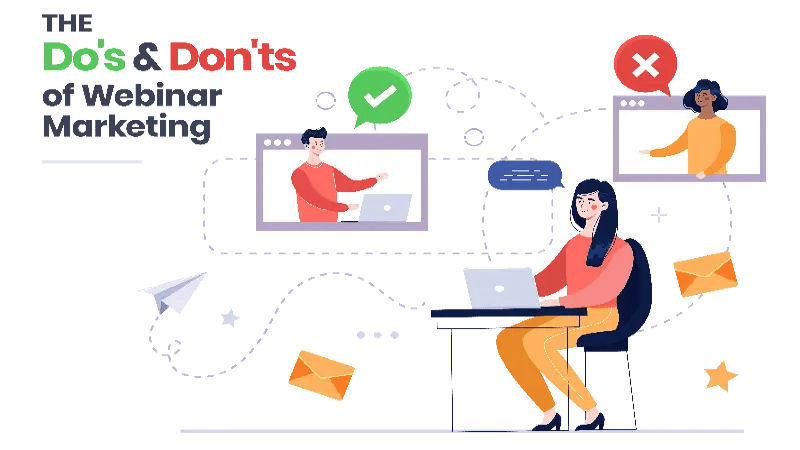

Webinars are an effective way to connect with your target audience, build your brand, and generate leads. But how do you create a webinar that stands out and attracts a large audience?
Let's start with what you should do to create and promote your webinar.
The Do's of Webinar Marketing
1. Provide valuable content that meets the needs of your target audience.
Your webinar content should be valuable and relevant to your target audience. Ensure that your webinar addresses their pain points and solves their problems. Offer tips, tricks, and best practices that your audience can use to improve their business or personal life. If your audience feels they've learned something valuable from your webinar, they're more likely to attend future events and share them with their network.
How-to tip: Do your research.
Before you start planning your webinar, take some time to research your target audience. What are their pain points? What are their goals? What are they interested in learning about? Once you understand your audience well, you can start developing content that will be relevant and valuable to them.
Example: Let's say you're a business consultant helping small businesses grow. Your target audience is small business owners looking to improve their business. You could create a webinar on how to create a successful marketing plan. In your webinar, you would cover topics such as:
- How to identify your target market
- How to create a marketing budget
- How to choose the right marketing channels
- How to measure the success of your marketing campaigns
This webinar would be valuable to your target audience because it would provide them with the information they need to improve their marketing efforts.
2. Choose a relevant and attention-grabbing topic for your webinar.
Your webinar topic should be both relevant and attention-grabbing. It should align with your business goals and be of interest to your target audience. Choose a topic that solves a problem, addresses a common pain point, or provides valuable information. A catchy title can also help attract potential attendees.
How-to tip: Think about your target audience.
When choosing a topic for your webinar, consider your target audience. What are they interested in? What are their pain points? What are their goals? Once you have a good understanding of your audience, you can start to brainstorm topics that would be relevant and interesting to them.
Example: Let's say you're a marketing consultant helping small businesses grow. Your target audience is small business owners looking to improve their business.
You could create a webinar on how to create a successful marketing plan. This topic would be relevant to your audience because it would help them improve their business.
Additionally, the title of your webinar could be something like "How to Create a Successful Marketing Plan in 5 Steps." This title is catchy and attention-grabbing, and it would likely pique the interest of potential attendees.
3. Promote your webinar through different channels, such as social media, email marketing, and your website.
Promoting your webinar is crucial in attracting a large audience. Use different channels to promote your event, including social media, email marketing, and your website. Leverage your existing audience by sharing the event on your social media pages and emailing your list. Use paid advertising to reach a wider audience.
How-to tip: Create a registration page.
The first step in promoting your webinar is to create a registration page. This page should include all the important information about your webinar, such as the topic, date, time, and speaker. It should also include a link to register for the webinar.
Example: Let's say you're a marketing consultant helping small businesses grow. You could create a registration page for a webinar on creating a successful marketing plan. The page would include the following information:
- Title: How to Create a Successful Marketing Plan in 5 Steps
- Date: mmm dd, yyyy
- Time: 10:00 AM - 11:00 AM EST
- Speaker: John Smith, Marketing Consultant
- Description: In this webinar, you will learn how to create a successful marketing plan to help you grow your business. You will learn how to identify your target market, create a marketing budget, choose the right marketing channels, and measure the success of your marketing campaigns.
- Registration: Click here to register for the webinar.
4. Use a reliable and user-friendly webinar platform.
A reliable and user-friendly webinar platform is essential to the success of your event. Choose a platform that's easy to use for both you and your attendees. Ensure the platform accommodates your audience size and offers features like live polls, Q&A, and screen sharing.
5. Prepare and rehearse your presentation to ensure a smooth delivery.
Preparation is critical to a successful webinar. Make sure you have a well-structured presentation and that you rehearse it ahead of time. This will ensure smooth delivery and help you feel confident during the event.
6. Engage with your audience through Q&A sessions and polls.
Engaging with your audience during the webinar is essential to keep them interested and attentive. Use features like Q&A sessions and live polls to encourage interaction and feedback. This can help you gauge your audience's interests and needs and make adjustments during the presentation.
7. Follow up with attendees after the webinar with a thank-you email and additional resources.
Webinar follow-up is essential to building a relationship with attendees. Send a thank-you email summarizing the event, key takeaways, and additional resources. This can help you continue to provide value to your audience and keep them engaged with your brand.
How-to tip: Send a thank-you email within 24 hours of the webinar.
Your thank-you email should thank attendees for participating in the webinar and summarize the key takeaways. You can also include a link to the webinar recording or a copy of your presentation materials.
Example: Let's say you gave a webinar on how to create a successful marketing plan. You could send a thank-you email to your attendees within 24 hours of the webinar. The email could include the following:
- Subject: Thank you for attending our webinar on creating a successful marketing plan!
-
Body: Dear [Attendee Name],
Thank you for attending our webinar on creating a successful marketing plan! We hope you found the information helpful.
Here are a few key takeaways from the webinar:
- Identify your target market. Before creating a successful marketing plan, you need to identify your target market. Who are you trying to reach? What are their needs and wants?
- Create a marketing budget. Once you know your target market, you must create a marketing budget. How much money are you willing to spend on marketing?
- Choose the right marketing channels. Many different marketing channels are available, such as social media, email marketing, and paid advertising. You must choose the right channels for your target market and budget.
- Measure the success of your marketing campaigns. Once you've launched your marketing campaigns, you must measure their success. How many people are you reaching? Are you generating leads? Are you making sales?
We hope you found this information helpful. If you have any questions, please don't hesitate to contact us.
Sincerely, [Your Name]
- Call to action: Include a call to action in your thank-you email. For example, you could invite attendees to sign up for your newsletter or download a free ebook.
By following these best practices, you can create engaging and effective webinars that drive leads and sales for your business.
The Don'ts of Webinar Marketing
While knowing what to do is essential, knowing what not to do is equally crucial in webinar marketing. In this section, we'll review some common mistakes to avoid, so you can ensure that your webinar stands out for all the right reasons.
- Don't be too salesy.
One of the biggest mistakes that webinar marketers make is being too salesy. If your audience feels they're being sold to, they'll quickly tune out. Instead, focus on providing valuable content that addresses their needs and pain points. While promoting your products or services is okay, make sure you do so subtly and non-intrusively.
- Don't bore your audience with a lackluster presentation.
Webinars can be an excellent tool for engaging with your audience, but only if the presentation is engaging. Avoid a dull or monotone delivery and, instead, add some excitement and energy to your presentation. Incorporate visual aids, like slides or videos, to keep your audience engaged.
- Don't choose a topic that's too broad or too niche.
Choosing a topic that's too broad or too niche can lead to low attendance and engagement. A topic that's too broad may not be specific enough to attract a targeted audience, while a topic that's too niche may not interest a large enough audience. You can strike a balance and choose a topic that's specific enough to attract your target audience but broad enough to appeal to a wider audience.
- Don't forget to test your technology and internet connection.
Technical issues can be a significant distraction during a webinar. Test your technology and internet connection ahead of time to avoid any mishaps. Ensure your microphone and camera are working, and your internet connection is stable.
- Don't neglect to interact with your audience.
Engaging with your audience is crucial for keeping them interested and attentive during the webinar. Use features like Q&A sessions and live polls to encourage interaction and feedback. Address their questions and concerns, and make them feel heard and valued.
- Don't forget to follow up with attendees after the webinar.
Following up with attendees after the webinar is crucial in building a relationship with them. Send a thank-you email summarizing the event, key takeaways, and additional resources. This can help you continue to provide value to your audience and keep them engaged with your brand.
By avoiding these common mistakes, you can create engaging and effective webinars that drive leads and sales for your business.
Webinar Marketing: It's All About Balance
Effective webinar marketing is all about striking a balance between the do's and don'ts. Following the best practices outlined in this blog post, you can create engaging and informative webinars that attract and retain a targeted audience. Remember to focus on providing value to your audience rather than just pushing your products or services.
But, even if you follow all the right steps, success isn't guaranteed. As with anything in life, there's always an element of unpredictability. Sometimes, the most unexpected things can lead to the most significant wins. So, while having a plan and sticking to it is essential, don't be afraid to take risks and try new things.
Effective webinar marketing is about finding the right balance between following best practices and taking creative risks. Doing so can create webinars that attract and engage your audience and drive leads and sales for your business. So, go ahead and take the plunge into the exciting world of webinar marketing, and remember to keep strategy in mind while having fun and being creative.




Leave a Comment
Have thoughts on this article?
Share your feedback, ask questions, or join the discussion with our community.