Learn about Aspiration Marketing Blog | RevOps (2)

Explore by Topic

Select a category below to filter our most popular insights and strategies.

RevOps 2026: The Role of the 'AI Orchestrator'

Many revenue leaders find their marketing technology stack resembles a room of brilliant musicians all playing different songs—impressive, but chaotic. The proliferation of single-use AI tools has led to 'AI Sprawl,' creating automated silos instead of a unified system. The solution is the AI Orchestrator, a new, critical role in RevOps that conducts these disparate AI agents into a single, harmonious revenue-generating symphony.

Solving the 'Messy Middle': Automating the MQL to SQL Handoff

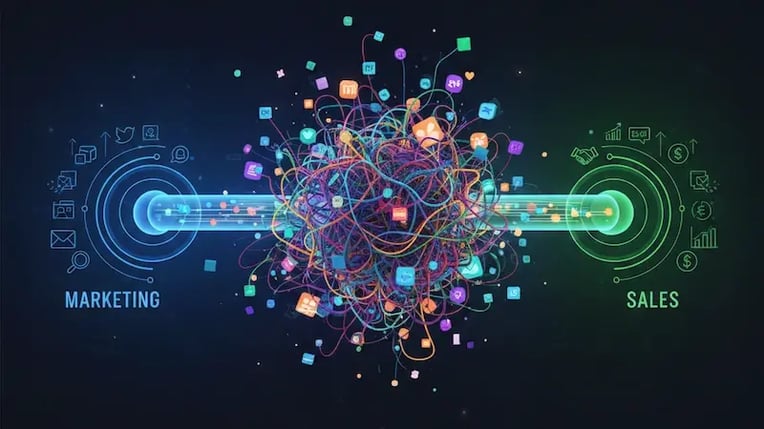
How many 'hot' leads are currently sitting in your CRM, slowly cooling off because nobody claimed them? This question keeps RevOps managers up at night. After spending thousands on marketing, a lead finally shows interest, but instead of a swift introduction to a sales rep, they enter the 'Messy Middle'—the operational gap between marketing and sales where revenue opportunities go to die.
Sales Enablement 9 Min Read

Beyond Basic Onboarding: Why You Need a Governance Plan

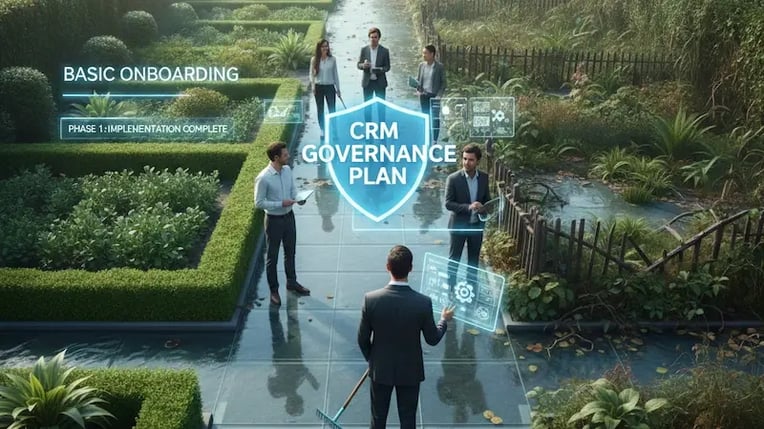
You've successfully implemented your new CRM, but the real work is just beginning. Many businesses mistakenly believe that CRM setup is a one-time project, but this 'set and forget' mindset is a direct path to failure. To transform your CRM from a simple tool into a powerful revenue engine, you must shift from an implementation mindset to a continuous CRM governance strategy.
Inbound Marketing 8 Min Read

RevOps as a Service vs. Hiring In-House: A Cost-Benefit Analysis

As businesses scale, aligning sales, marketing, and customer service becomes a critical challenge, often creating friction in the revenue engine. This leads to a pivotal decision for leadership: Is it better to build an internal team by hiring a full-time RevOps manager, or is it more strategic to partner with an external agency for RevOps as a Service? Understanding the true costs and benefits of each path is essential for sustainable growth.

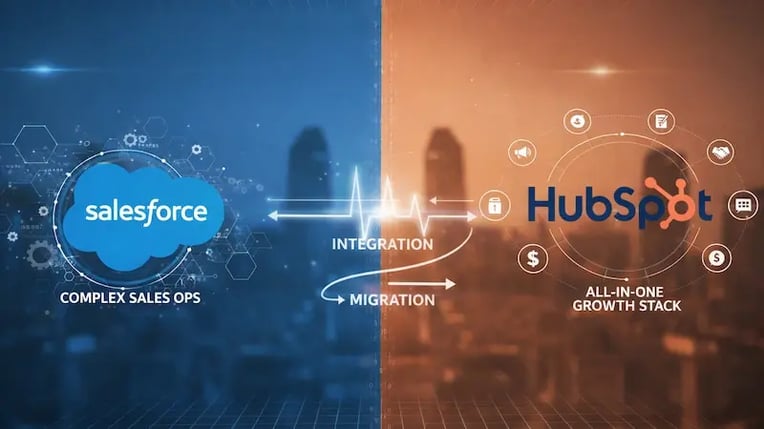
HubSpot vs. Salesforce: When to Integrate and When to Migrate

Choosing between HubSpot and Salesforce is more than a software decision; it's a strategic choice that dictates how your business will scale. The friction between your sales and marketing tools can hinder revenue growth, forcing leaders to decide whether to integrate the two powerhouses or migrate fully to one unified platform to support their RevOps strategy.
Sales Enablement 7 Min Read

Breaking Down Silos: The War Between Sales, Marketing, and Service

If the familiar scene of Marketing, Sales, and Service teams blaming each other for missed targets and unhappy customers resonates with you, you're not alone. This internal conflict, born from organizational silos and disconnected technology, quietly drains revenue and stifles growth. The solution isn't more meetings or finger-pointing; it's a strategic shift in how your entire organization operates.
Sales Enablement 9 Min Read

Is Your Tech Stack Slowing You Down? How to Perform a RevOps Audit

Many companies operate with a 'Franken-stack'—a patchwork of disconnected applications that creates more friction than it solves. When your teams spend more time on manual data entry and fixing sync errors than on customer-facing activities, your technology becomes a liability. A RevOps audit is the strategic process of untangling this mess to transform your tech stack into a streamlined revenue engine.

The Hidden Risks of DIY HubSpot Implementation (And How to Avoid Them)

While the temptation to set up HubSpot yourself to save money is strong, there's a significant difference between a system that is merely activated and one that is strategically engineered. Treating a powerful CRM like a simple software installation introduces major risks, often costing businesses more in lost opportunities and cleanup than a professional implementation would have from the start.

Why the 'Funnel' is Broken: Moving to a Lifecycle Revenue Model

For decades, businesses have relied on the linear sales funnel, focusing immense resources on acquiring new customers. However, this model is fundamentally flawed in the modern economy, treating the sale as a dead end. The most successful companies are now abandoning this costly, start-stop approach in favor of a Lifecycle Revenue Model, a circular strategy that turns delighted customers into the primary engine for sustainable growth.
Inbound Marketing 9 Min Read

RevOps 101: Aligning People, Process, and Platform for Growth

When marketing, sales, and customer success operate in isolated silos, businesses suffer from costly friction, dirty data, and significant revenue leakage. Transitioning from a fragmented, traditional funnel to a unified revenue operations engine eliminates the 'blame game' and creates a seamless, personalized lifecycle for the modern buyer.
Inbound Marketing 7 Min Read

The High Cost of Dirty Data: Improve Your CRM Data Hygiene.

If you've ever felt the sting of a perfect prospect slipping through the cracks due to a missing phone number or a duplicate record, you understand the cost of a messy CRM. Poor data quality isn't just an IT headache; it's a silent revenue killer that creates friction across your entire company, wasting marketing spend and eroding sales team trust in the very system designed to help them succeed.
Inbound Marketing 7 Min Read